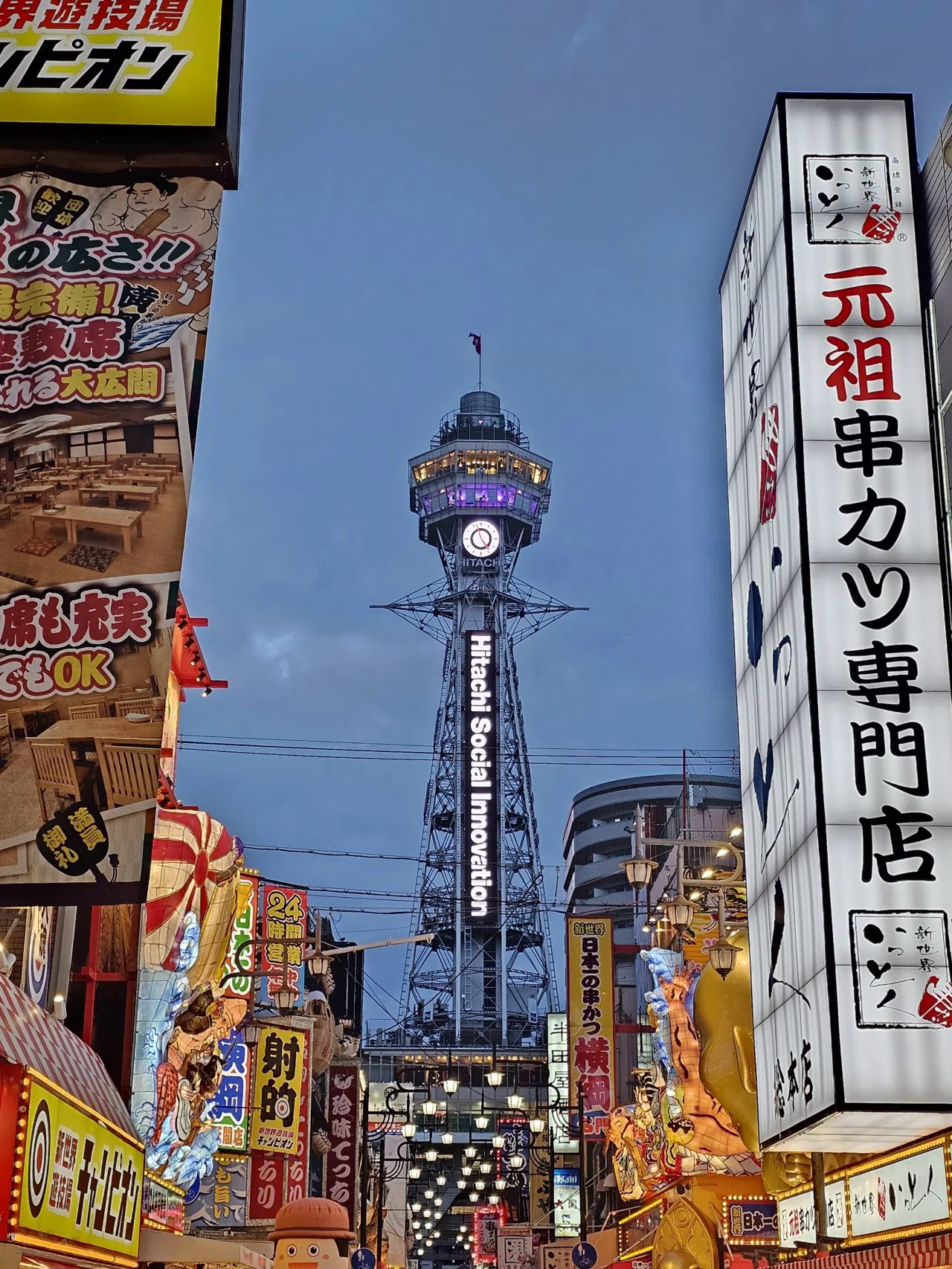

Tsutenkaku is not tall. It is a shade over a hundred metres in a city that has put more than twice that within a single metro stop, and anyone climbing it for a skyline has bought the wrong ticket. What the deck gives you, best at dusk, is an overhead map of your own evening: the neon flicking on across Shinsekai, the fryers already going, the lanes of food laid out in a grid you are about to walk.
A 1912 folly rebuilt as a neon signpost
Tsutenkaku Tower (Shinsekai) sits where two axes of the district cross, which is not an accident. The original tower went up in 1912 as the centrepiece of a brand-new pleasure quarter built on exposition land; it was lost in the war and the present steel tower replaced it in 1956. Shinsekai spent the decades after that as the part of Osaka the city did not put on postcards, which is why the eating here never got sanded down into something safe.
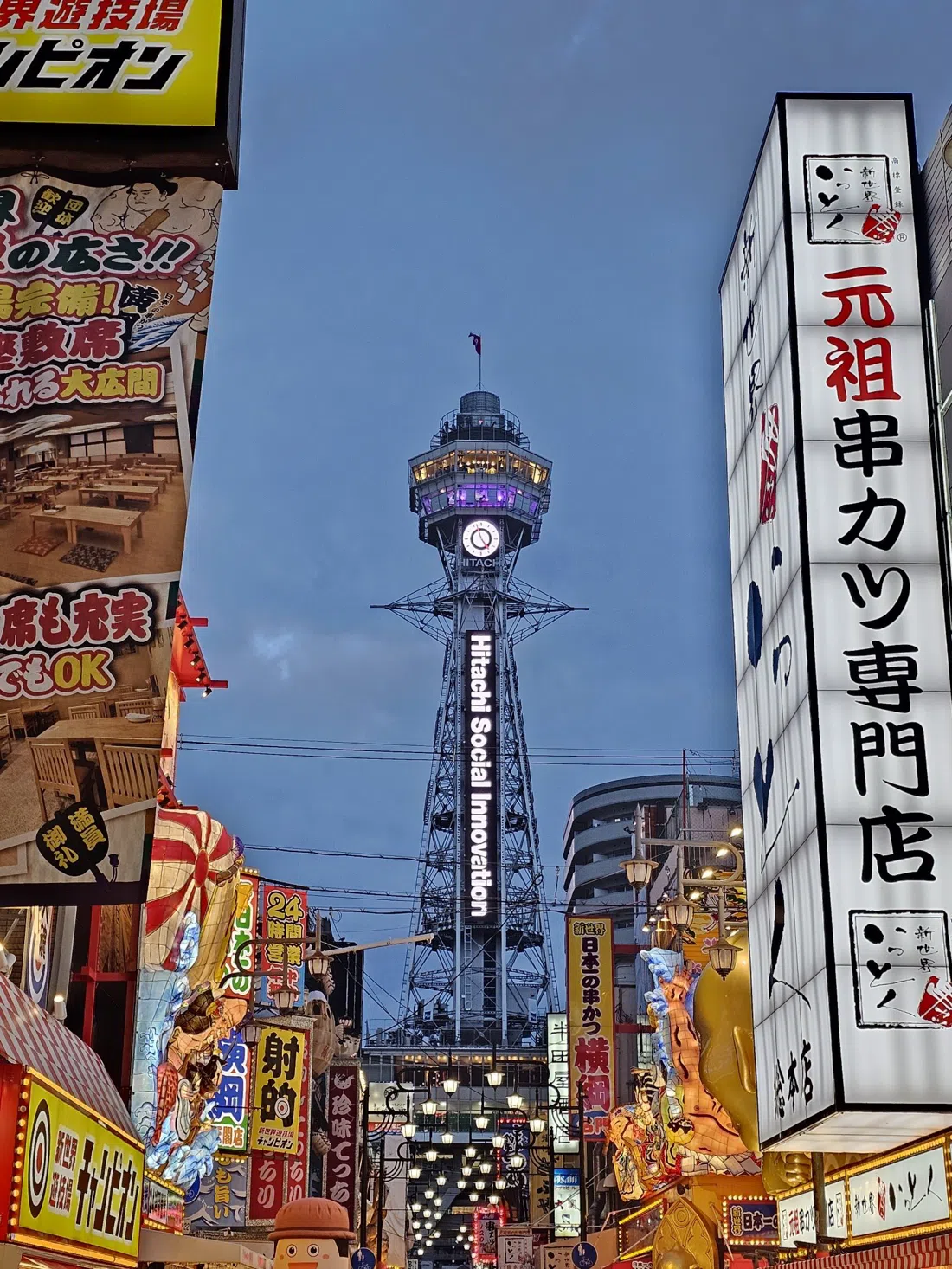
The visit itself is simple. You buy at the desk, ride up, and stand on an enclosed observation deck looking out over rooftops, the zoo's tree canopy, and the high-rise wall to the south. The tower runs 9:00 to 21:45 daily with last entry at 21:15, so it is one of the few attractions in the area that outlasts dinner. The general ticket is ¥1,500 for adults and ¥800 for children. The open-air deck at the top, marketed as TIP THE TSUTENKAKU, is sold only as a set with the general ticket, so decide at the desk rather than upstairs.
Riding up and sliding down
The part people talk about afterwards is the TOWER SLIDER: a 60-metre spiral slide that wraps the outside of the tower's leg and drops you into the basement in roughly ten seconds. It costs ¥1,100 for adults and ¥600 for children on top of the deck ticket, and the rules are firm: ages 7 to 65, a minimum height of 120cm, a maximum weight of 120kg. The Dive & Walk attraction is charged separately again, so a full-fat visit is three line items, not one.
Budget 45 minutes to an hour for the tower if you are only doing the deck, and closer to 90 with the slide and the queue for it. Groups need to plan for the lift rather than the ticket. Advance group booking is handled at the desk, but the car holds limited numbers, so any party above a handful gets split across trips and reassembled upstairs. That is why guided food walks in this area treat the tower as an optional add-on at the start or end rather than marching everyone up together.
Jan Jan Yokocho is the real attraction
If you only have two hours here, spend them in Jan Jan Yokocho (Nanyo-dori Shotengai) (Shinsekai) rather than in the air. It is a covered arcade, free to walk, no door policy, open to the street at both ends, and it is the spine of eating in the district. The roof matters: this is the one part of a Shinsekai plan that works unchanged in rain.
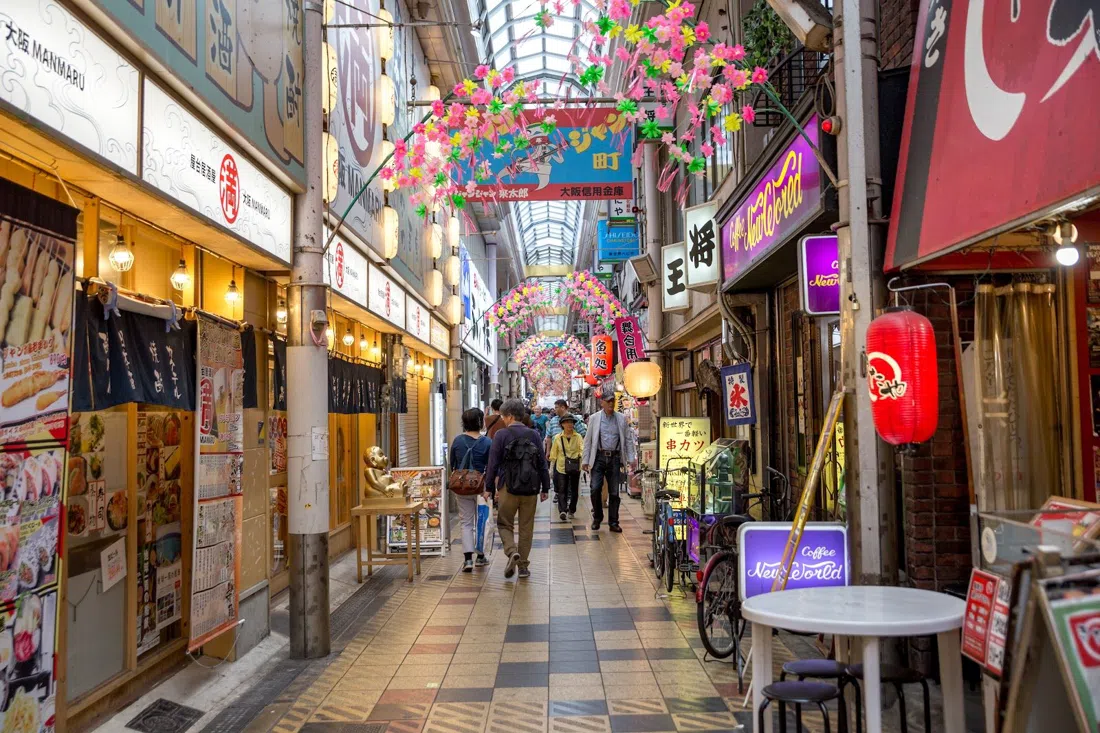
The lane is barely wide enough for two people abreast. Guided groups walk it single file and split across shops, and you should plan the same way even as a family of four. The local norm is ¥1,000 to ¥2,000 per shop, which is the right way to eat here: three or four small stops rather than one sit-down meal. It is quietest on a weekday morning and genuinely jammed from dusk onward, so if you want photographs of the arcade without a wall of shoulders in them, come at 10:30 and eat again later.
The kushikatsu counters and how they seat you
Ganso Kushikatsu Daruma Shinsekai Sohonten (Shinsekai) opened on this spot in 1929 and is generally treated as the birthplace of modern kushikatsu: skewered, battered, deep-fried, then dipped once into a communal tub of thin sauce. The no-double-dipping rule that every shop in Japan now posts on its wall comes from here. Skewers run ¥110 to ¥300, the nine-skewer Daruma Set is around ¥1,400, and ¥1,500 to ¥3,000 covers a proper go at it with beer. Weekdays it opens 11:00 to 22:30, weekends from 10:30, last order 22:00. It is counter-led and cramped; small parties are fine, larger ones get broken up or wait, and the same operator's Jan Jan branch takes the overflow.
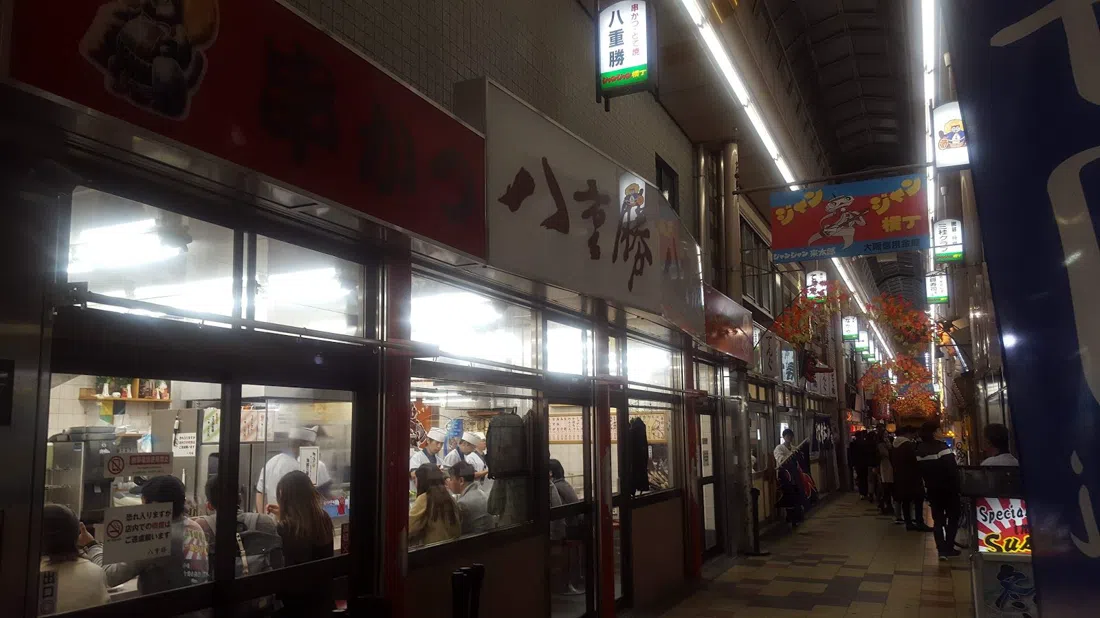
Yaekatsu (Shinsekai) is the locals' pick over the famous names, and it has been in the alley for over seventy years. It is a horseshoe counter with no table seating, which in practice means solos and pairs; a group will be separated, full stop. Skewers are about ¥150 to ¥250, a head lands at ¥1,500 to ¥2,500, and hours are 10:30 to 20:30. It closes one midweek day and sources disagree on whether that is Wednesday or Thursday, so check on the day before you build a route around it. The weekday queue of 20 to 30 minutes moves faster than it looks.
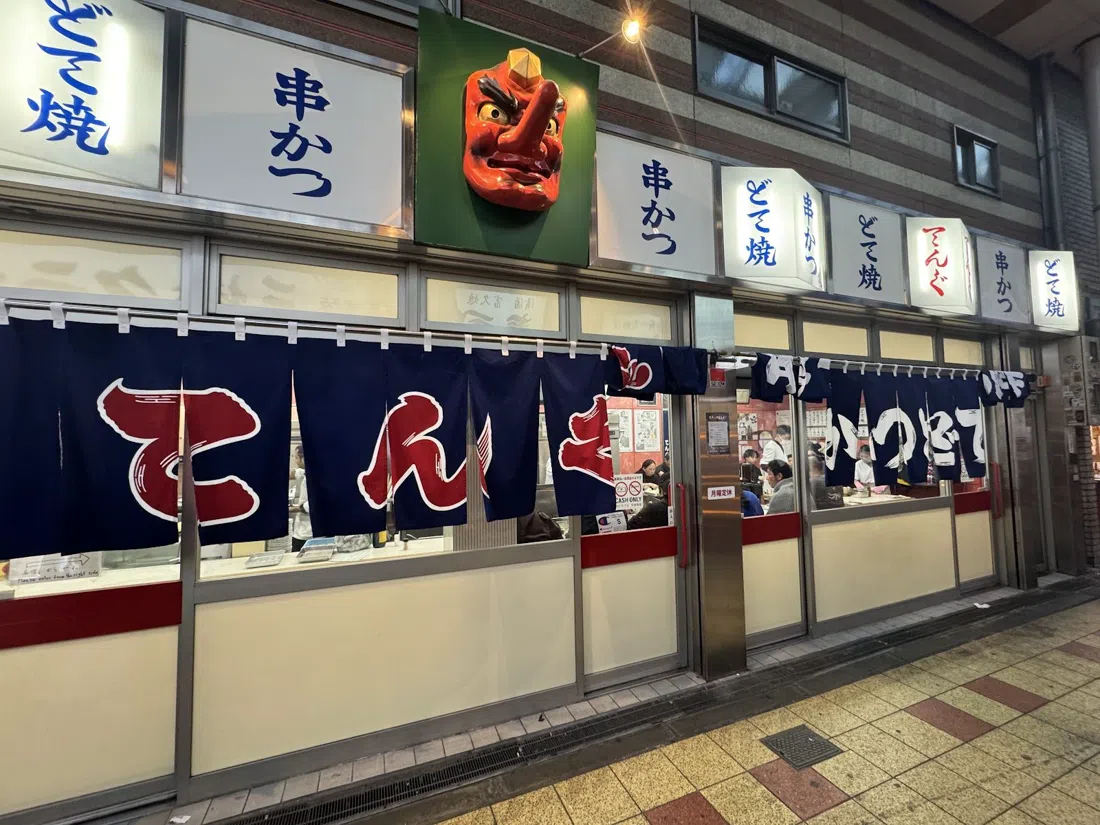
Kushikatsu Tengu (Shinsekai), founded 1948, is the one to choose if you want doteyaki, beef sinew stewed soft in sweet miso, next to a heavier-battered kushikatsu. Skewers are roughly ¥130 to ¥300 and a head is ¥1,500 to ¥2,500. It is 10:30 to 20:30 and closed Mondays. Couples and threes work at the counter; anything larger will not sit together.
The stops that are not deep-fried
Two rounds of kushikatsu is a lot of batter, and the fix is built into the same few streets. Daiko Sushi Honten (Shinsekai) is a counter with about a dozen seats serving plates of three nigiri from roughly ¥150, prices that read like a misprint until they arrive. A head runs ¥1,000 to ¥2,000. It opens 11:00 to 21:00 and closes Thursdays. Tiny groups only; the south branch is the same operator rather than a second option.
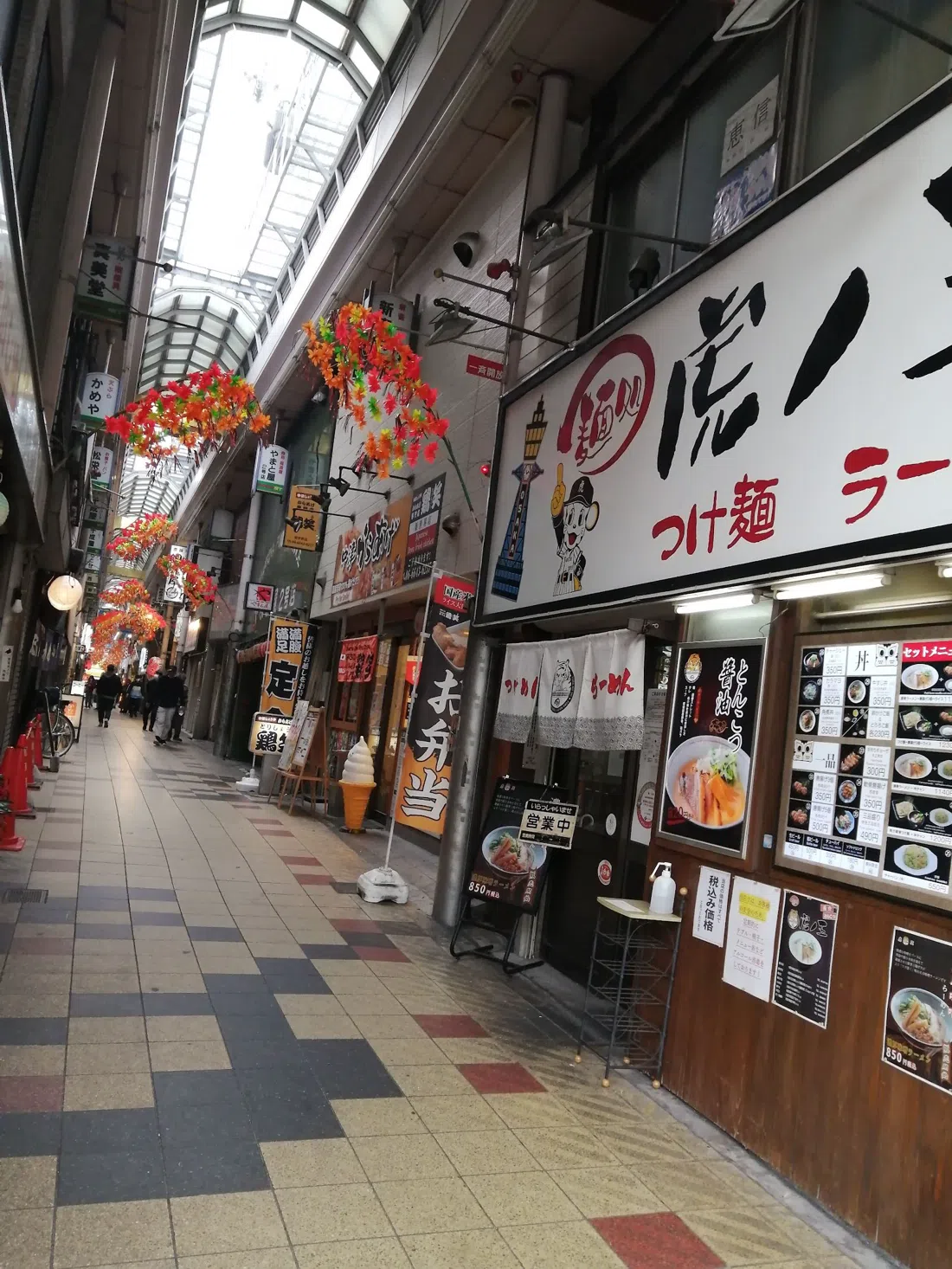
Shinsekai Kankan (Shinsekai) is a takeaway hatch with one thing on the menu and no seating: about ¥450 to ¥500 for eight takoyaki, cash only, eaten standing on the pavement. It is widely rated the best takoyaki in the district and it is also the most awkward stop to schedule, closed Mondays and Tuesdays, with posted hours varying between roughly 09:30–18:00 and 10:00–19:30. If it is a fixed point in your plan rather than a happy accident, phone ahead.
Mixed juice, parfaits and two Showa rooms
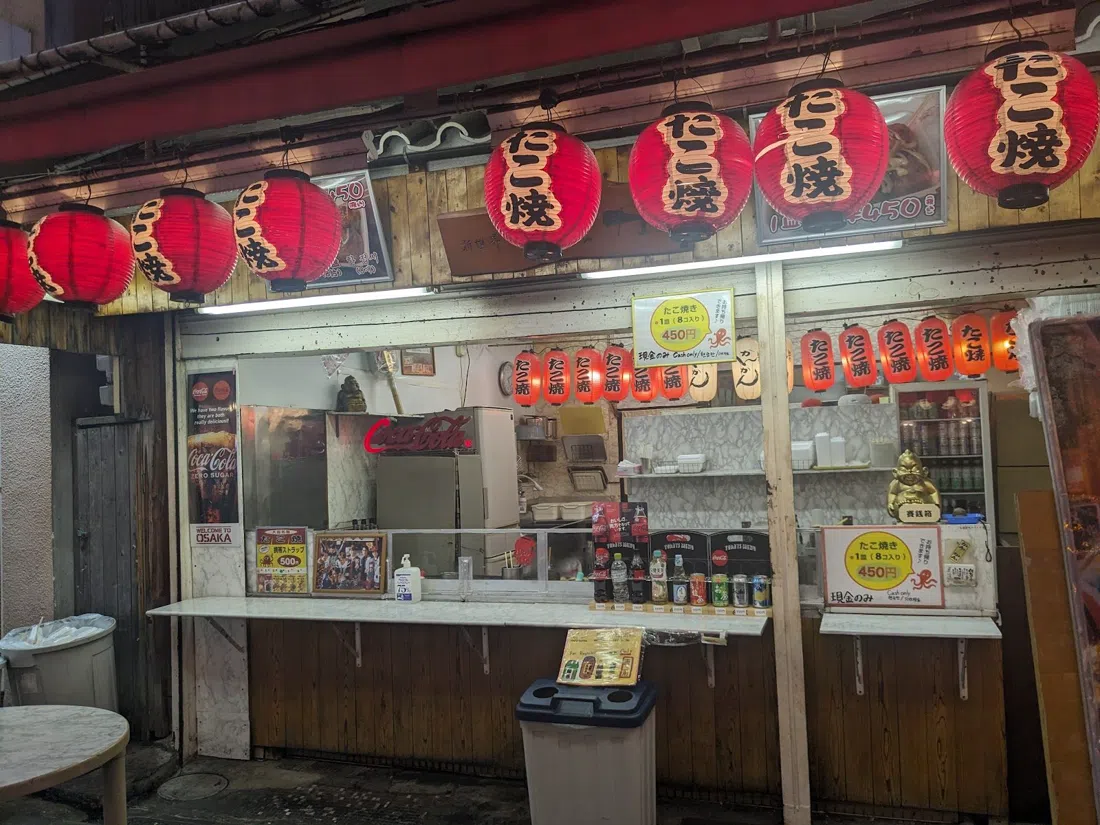
Sennariya Coffee (Shinsekai) is the most defensible café stop in the area on pure provenance: founded in 1948 and the literal origin of Osaka's mixed juice, the blend of apple, banana, peach and mandarin now served all over the city. Drinks are about ¥500 to ¥800, sandwiches and retro hot dogs ¥600 to ¥1,200. It runs 11:30 to 19:00 on weekdays and from 09:00 at weekends, which makes the weekend morning opening the single best slot for a group; the room is small and a handful of people is its comfortable limit at peak.
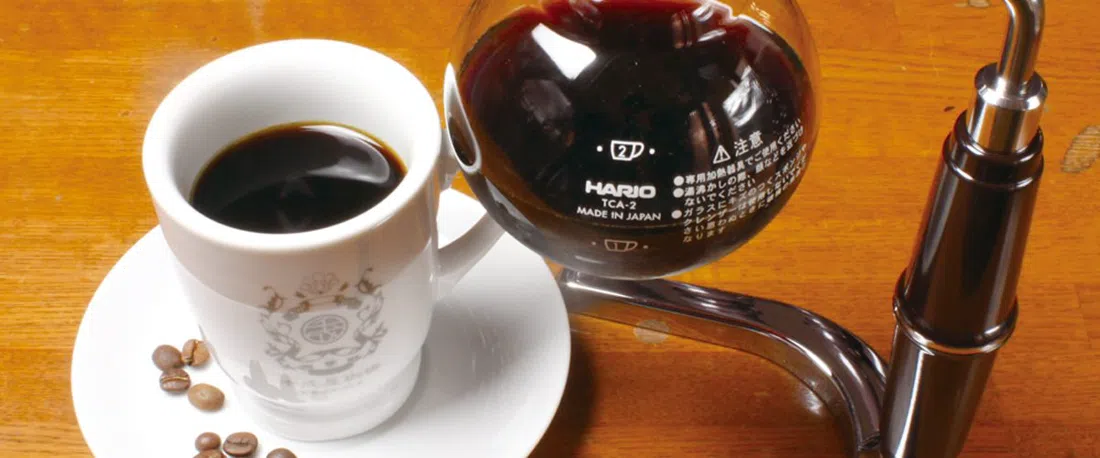
Doremi (Shinsekai) is where the crawl should end. Parfaits and puddings are ¥800 to ¥1,400, coffee about ¥500, and the interior is a genuine Showa room rather than a set dressed to look like one. It is cash only, takes no reservations, and is very small, so over four people is impractical. Open 10:00 to 18:00, closed Mondays.
Smart balls, hot water and the rest of the block
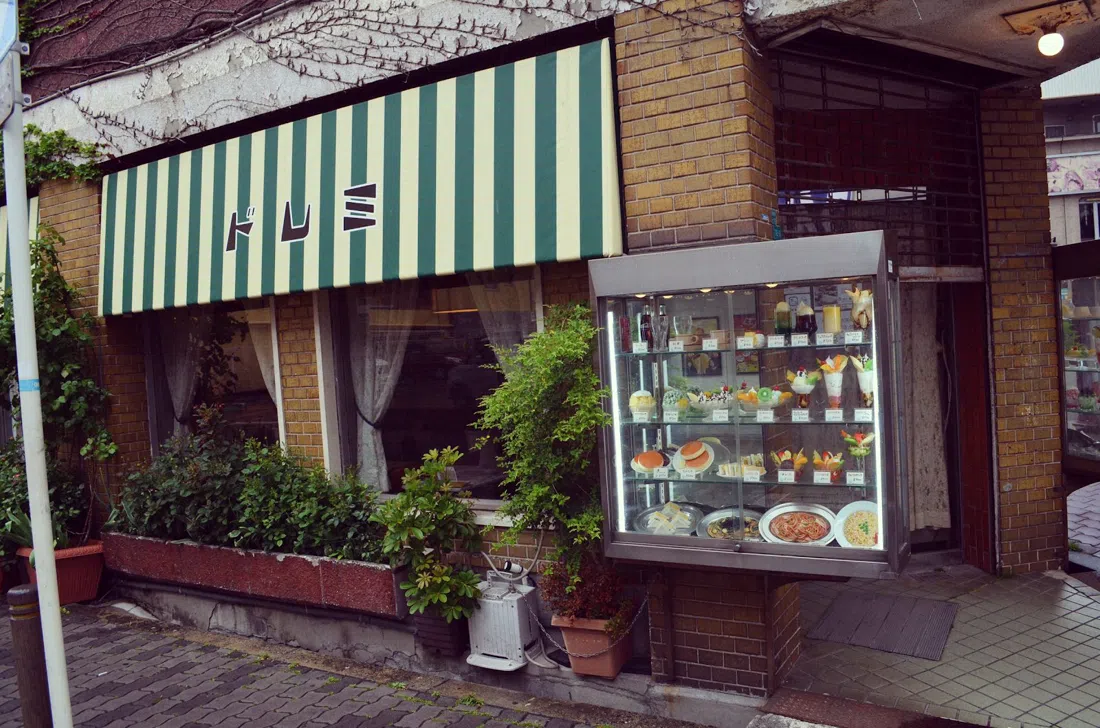
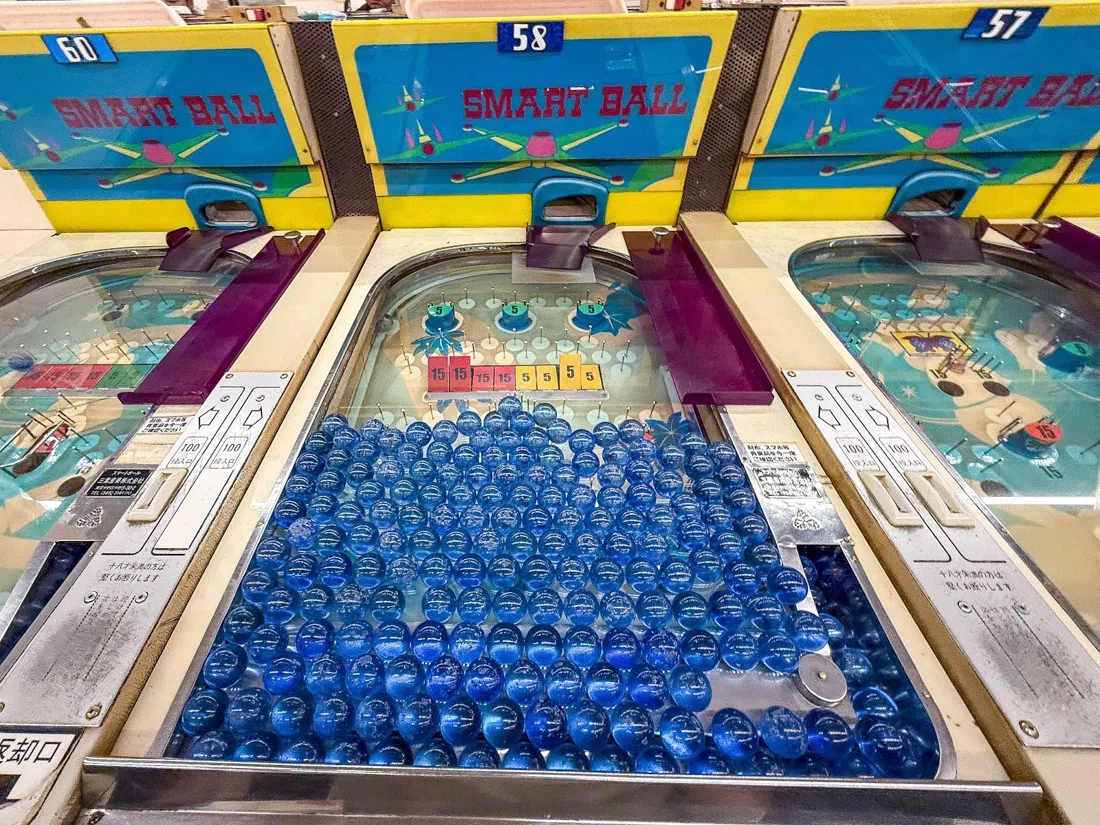
Smart Ball New Star (Shinsekai) is a five-minute detour that explains more about what this district was than any plaque does. Smart ball is a horizontal pinball-adjacent game played for small metal balls; this is the only parlour of its kind left in Osaka and one of the largest in Japan. Plays are ¥100 to ¥300, it is open 10:00 to 21:30, it closes irregularly about four days a month, and it is strictly 18+, which rules it out for family itineraries.
Spa World (Shinsekai) is the obvious pairing with a heavy fried evening: entry from about ¥1,500, a slide pass around ¥1,500, bedrock bath ¥800 to ¥1,000, and a late-night surcharge of roughly ¥1,300 if you stay past the small hours. It opens at 10:00 and runs very late. Two warnings. The European and Asian bathing zones swap between men and women monthly, so a mixed group is separated on arrival and cannot regroup until everyone is dressed again. Confirm the tattoo policy directly before you send anyone inked.

Tennoji Park at the quiet end
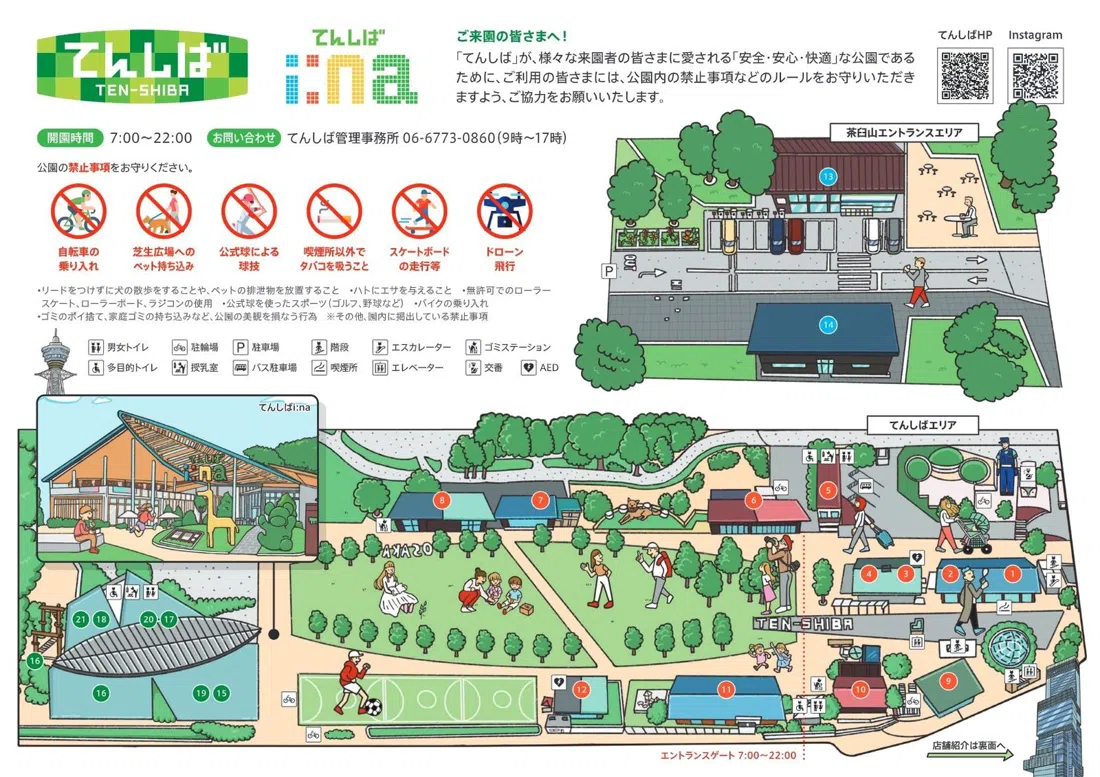
Walk east and the tone changes inside three minutes. Tennoji Park Entrance Area TEN-SHIBA (Tennoji) is free, unticketed and open 07:00 to 22:00, with cafés and restaurants on the lawn edge at ¥500 to ¥2,000, the natural place to park a group between the tower and the station. It turned ten in 2025 and hosts food events on the grass, including an Oktoberfest, so check the calendar before you promise anyone a quiet picnic.
Tennoji Zoo (Tennoji) sits five minutes from Dobutsuen-mae and is the reason that station has its name. Entry is ¥500 for adults and ¥200 school-age, 09:30 to 17:00 with last entry at 16:00, extended to 18:00 on May and September weekends and holidays; closed Mondays and 29 December to 1 January. Osaka City Museum of Fine Arts (Tennoji) reopened on 1 March 2025 after around two and a half years of renovation and holds roughly 8,700 works including National Treasures. The collection is ¥500 for adults, ¥200 for high school students and free for children and seniors, with special exhibitions priced separately; 09:30 to 17:00, last entry 16:30, closed Mondays and during exhibition changeovers. There are lockers, and large bags do not go into the galleries.

Whether to go higher
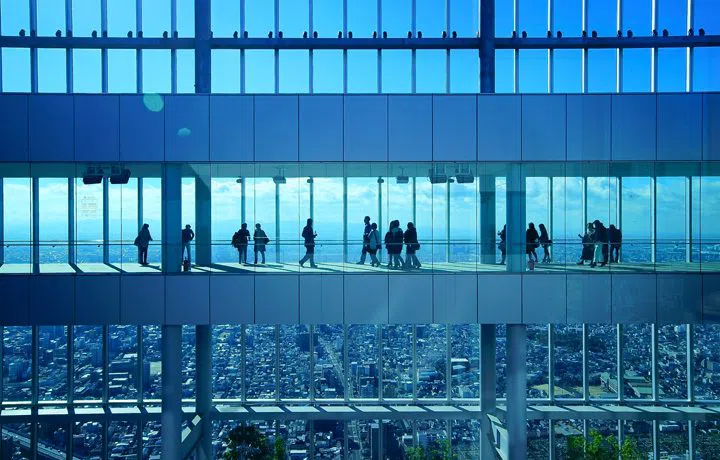
The honest comparison, and the question people ask, is Tsutenkaku versus Harukas 300 Observatory (Abeno Harukas) (Abeno), about a 20-minute walk or one metro stop away. Harukas wins on altitude and on the view, comfortably. It costs ¥2,200 at the counter or ¥1,980 booked online by the previous day, ¥900 or ¥810 for ages 6 to 14, and runs 09:00 to 22:00 with last entry at 21:30; timed entry keeps the queue honest. Tsutenkaku wins on character and price. If you want one great view of Osaka, go to Harukas. If you want the tower that the district was built around and a slide down the outside of it, stay where you are. Doing both in an evening is easy and not unreasonable.
Best time to go
The sweet spot for the whole area is a weekday late afternoon. Arrive around 16:00, walk the arcade while it is still navigable, eat from about 17:00, and ride the tower at 19:00 or later when the deck view is worth the ticket and the daytime coach traffic has gone. A weekday morning is the other good answer if you care more about the shops than the lights. The arcade is at its quietest then, and Sennariya's 09:00 weekend opening is the one slot where a small group gets a table without waiting.
Mondays are the day to avoid: Tengu, Doremi, the zoo and the museum are all closed, and the takoyaki hatch is shut Monday and Tuesday both. Rain is barely a factor because the arcade is roofed and the tower is indoors. Winter evenings are the best-looking, since it is fully dark by 17:30 and the neon does not have to compete. For wider context on how this fits alongside the rest of the city, see the Osaka guide.
Tickets at the door, queues and the case for a guided crawl
The tower is a walk-up. There is no advance-booking advantage for individuals, and outside school holidays the desk queue is short; the real bottleneck is the lift, and the slide queue on a Saturday evening. Groups should announce themselves at the desk rather than assume a block booking gets everyone into one car.
Eating is the part worth thinking about. Nothing here takes reservations in any meaningful way, the counters are small, and the good shops all close earlier than you expect: 20:30 is a common shutter time in the alley. A guided crawl exists and runs seven days a week, from about 85 USD per person, which buys you a route, a seat-finder and the local etiquette explained before you break it. Across the guided options here there are 11,296 traveller reviews, with the top one rated 5.0 out of 5 from 3,223 reviews, so the format clearly works for people. Do it yourself if you are two people and happy to queue; take a guide if you are four or more, short on time, or nervous about ordering at a counter with no English menu.
Is Tsutenkaku worth it
Yes, as a ¥1,500 orientation ticket and an excuse to be in Shinsekai after dark, though not as a view in its own right. Anyone judging it purely on altitude will be disappointed and should spend the money at Harukas instead. It suits first-time visitors who want the older, rougher, funnier version of Osaka; it suits anyone travelling with a 7-to-12-year-old who will talk about the slide for a week; it suits solo eaters, because half the best counters in the district only really work for one. It suits large groups least: almost every venue named here separates parties, and that is a design feature of the neighbourhood, not a failure of planning.
Practical notes
Ebisucho on the Sakaisuji subway line drops you closest to the tower; Dobutsuen-mae, Shin-Imamiya and Tennoji all put you within a ten-minute walk and connect to the rest of the network and the airport lines. Everything in this article is walkable from everything else.
Carry cash. The takoyaki hatch and Doremi are cash only, several counters prefer it, and the ¥1,000 note is the working unit of the arcade. A realistic evening runs ¥1,500 for the tower, ¥1,100 more for the slide, ¥3,000 to ¥4,000 across three food stops, ¥500 to ¥800 for coffee, and ¥1,500 up if you finish in the baths. Call it ¥7,000 to ¥9,000 a head with drinks, or ¥4,000 if you skip the tower extras and the spa.
Check closing days the morning of, not the week before: the midweek closure at Yaekatsu is genuinely disputed and Smart Ball shuts on no fixed pattern. And stay nearby if you can. Being able to walk back after the fryers close is worth more than a central address here, and the Osaka hotel search covers the Shinsekai and Tennoji side as well as the centre.