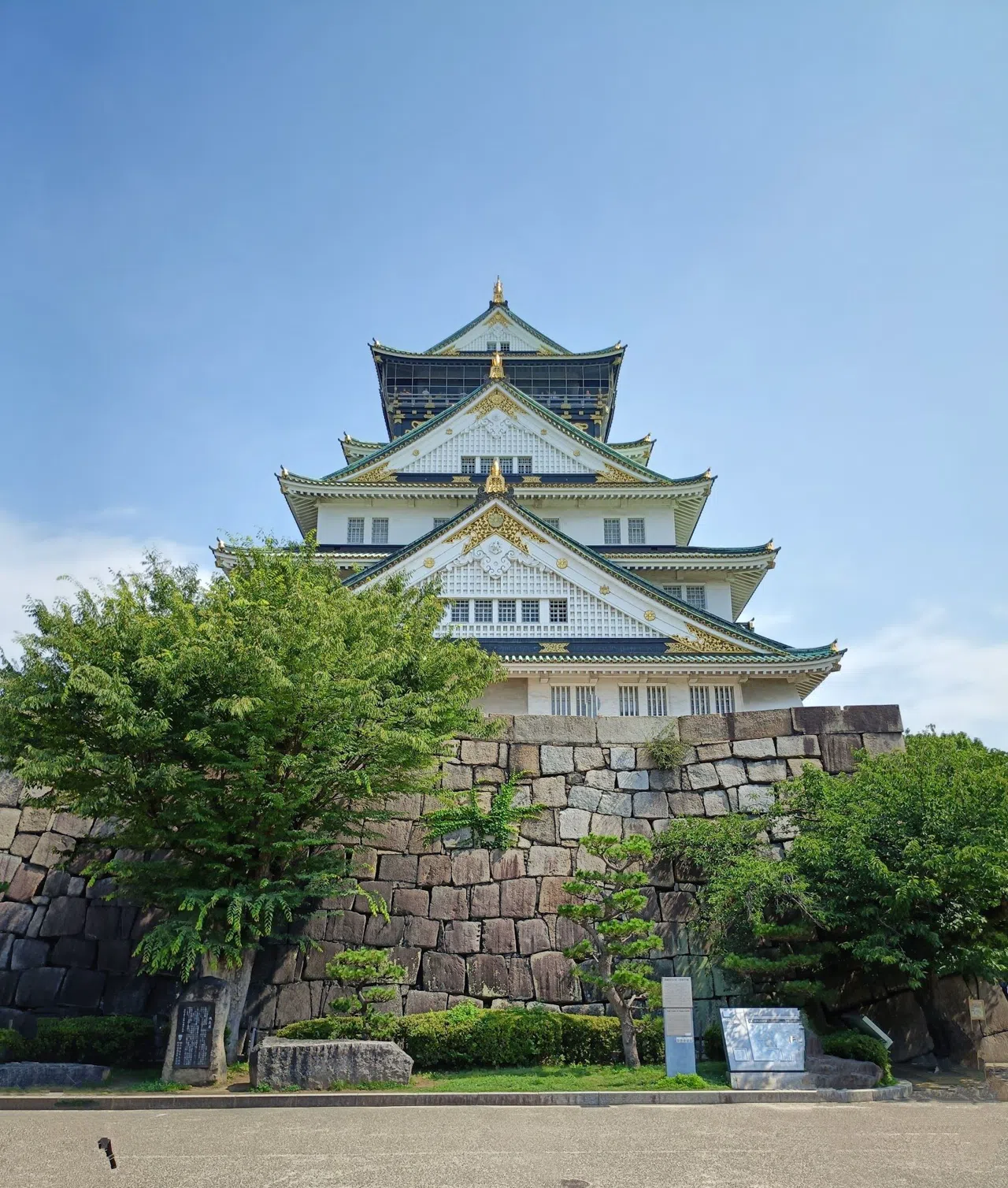

The stones flanking the approach to Sakuramon gate are wider than a car is long, floated in by barge and hauled into place with rope and timber by men who left no manual. Above them is the newest thing in sight: a concrete keep with a lift inside it, sitting on foundations that have been besieged, burned and deliberately buried. A first visit to Osaka Castle goes a great deal better once you know which parts are four hundred years old and which are ninety.
Start with what is old and what is not
Osaka Castle Park is a walled landscape rather than a single building: two moats, a sequence of gates, a few surviving turrets, broad lawns, and the tower in the middle. The tower is the element that has been replaced most often. Toyotomi Hideyoshi built the first castle here in the late sixteenth century; it was destroyed in 1615, and the regime that followed rebuilt over the ruins, raising the ground and sealing the older stonework underneath. So the walls you walk between are largely seventeenth-century work, while the keep you photograph is a modern reconstruction. Both deserve your attention. They are simply not the same age, and the exhibits inside rather assume you already know the difference.
That one fact reorders the day. Instead of queueing for the tower, seeing the view and leaving, you spend the morning moving between the reconstruction, the original fabric and the buried wall beneath, which is a far more interesting hour than it sounds.
Getting in, and getting up eight floors
Osaka Castle Main Tower (the Osaka Castle Museum), at the centre of the main bailey, opens 9:00 to 18:00 with last entry at 17:30, and closes only from 28 December to 1 January. Admission is ¥1,200 for adults, ¥600 for high school and university students on production of ID, and free for junior high age and under. Parties of 15 or more can arrange a group rate of ¥1,080 and ¥540, but it is handled at the ticket window on the day rather than in advance, so send one person ahead with the count while everyone else waits on the lawn.
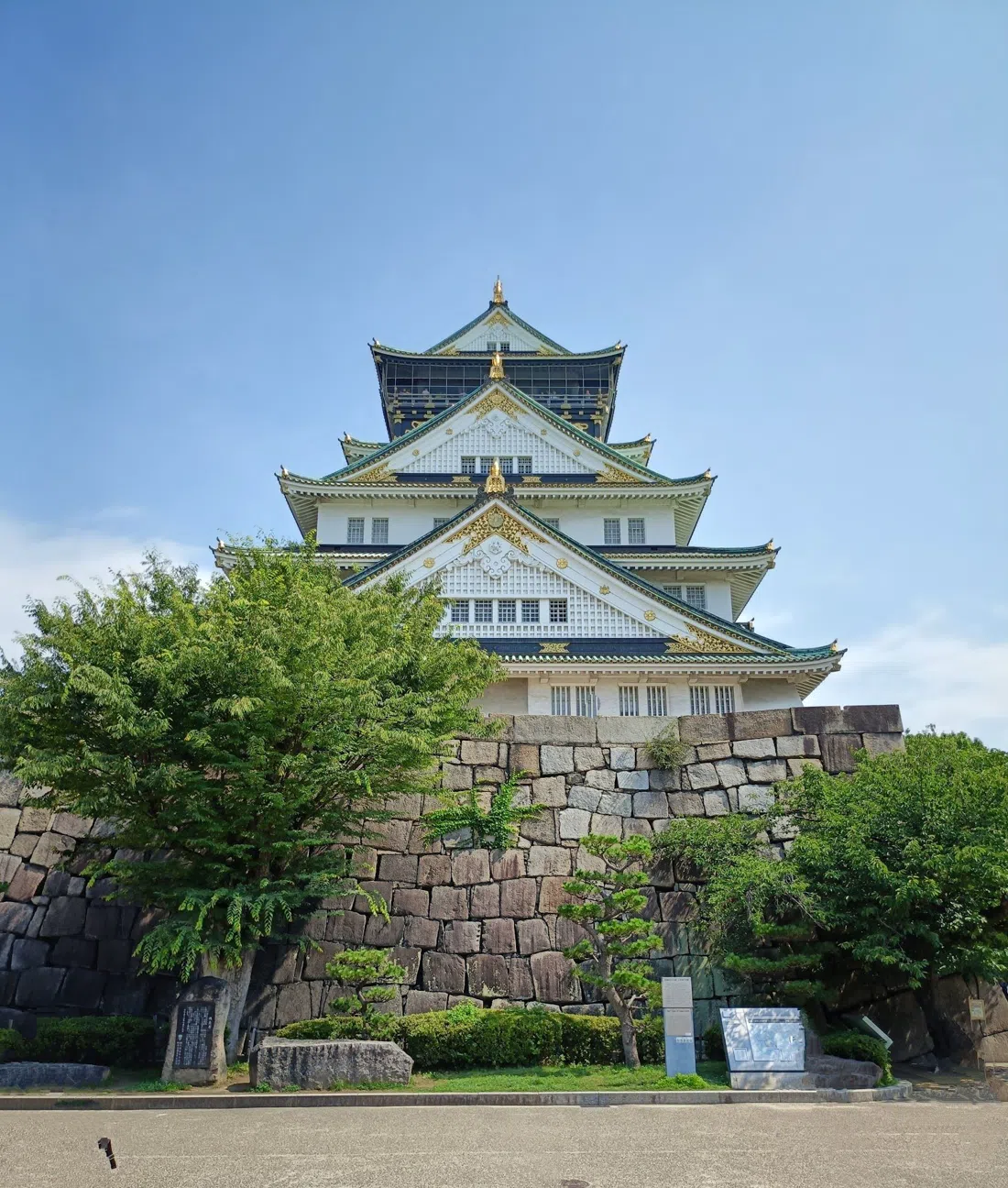
Nobody warns a first-timer about the lift: it serves the fifth floor only, so the last three flights to the eighth-floor observation deck are stairs, in a stairwell that turns warm and slow when the building fills. If someone in your group has bad knees or a pushchair, plan for them to stop at five and meet you afterwards. The view from the deck is the reward, but the way up is not step-free.
Timing matters as much. The ticket-booth queue is at its longest in the middle of the day, and midday is precisely when the coach parties and the school groups converge. Arrive within twenty minutes of the 9:00 opening, or leave it until around 15:30, and you walk straight through. Turn up at half past twelve on a bright weekend and you can lose the better part of an hour standing in the open. Allow sixty to ninety minutes inside once you are through the door.
The room under the courtyard most people walk past
The part of the complex I would send a first-time visitor to before the keep itself is Osaka Castle Toyotomi Stone Wall Museum, the Toyotomi Ishigaki-kan, a short walk from the tower inside the main bailey. It opened on 1 April 2025 and is still missed by most people who come through the gates, largely because it does not look like a museum from outside.
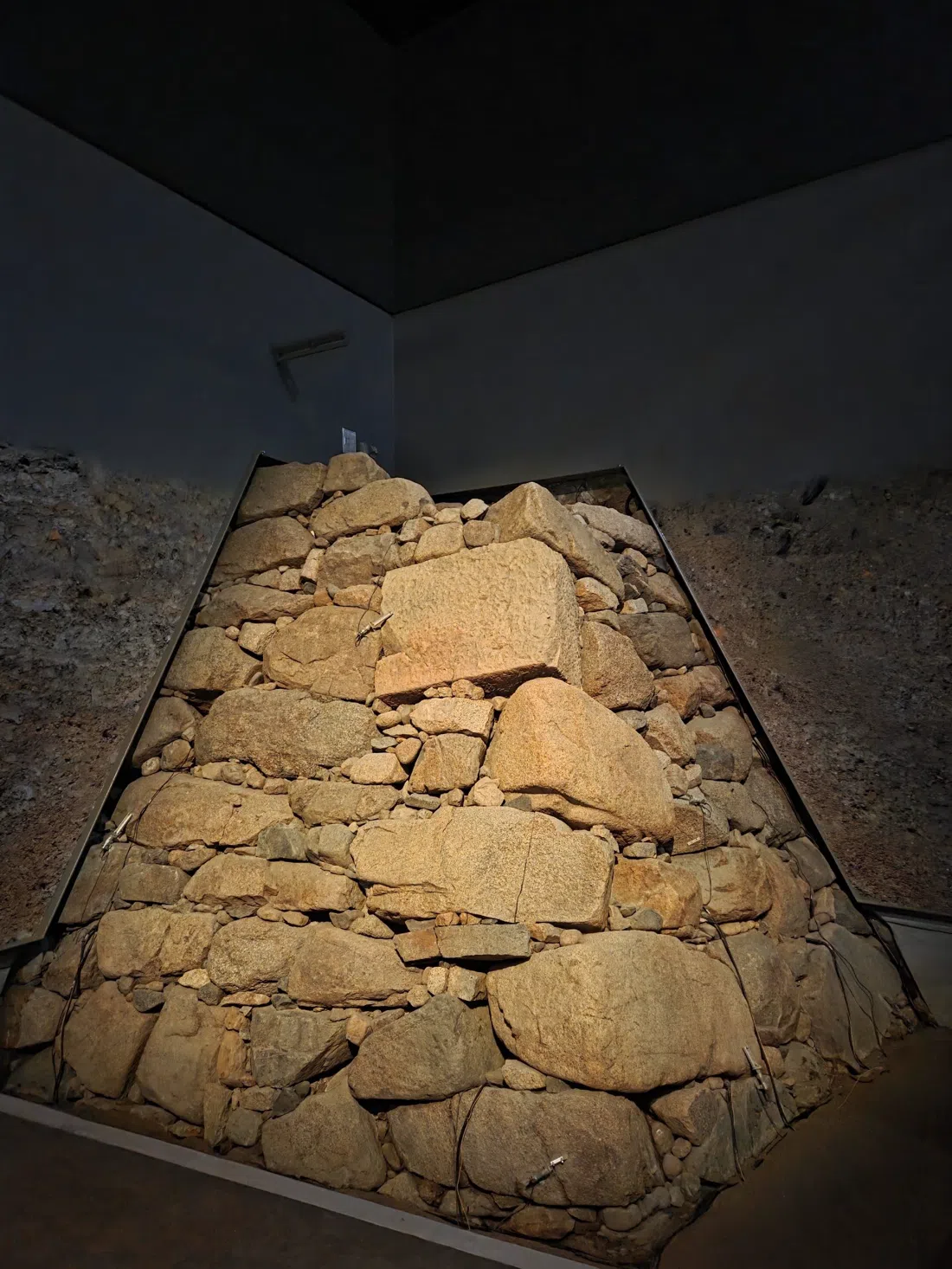
Underground, it shows the original Toyotomi-era stone wall, the one that was buried when the site was rebuilt after 1615 and stayed hidden for more than four hundred years. Standing at the foot of it, one wall on top of another, one century sealed over the last, does more for the castle's history than any caption upstairs in the keep. It is covered by the same ¥1,200 Main Tower ticket, so the only real reason people skip it is that they do not know it is there.
The chamber is small. Couples and pairs slip in and out in fifteen minutes, but a group of twenty will fill it and spoil it for themselves. Split into halves and send them in waves, with the second half at the shrine or the turrets in the meantime.
Thirty seconds of detour before the keep
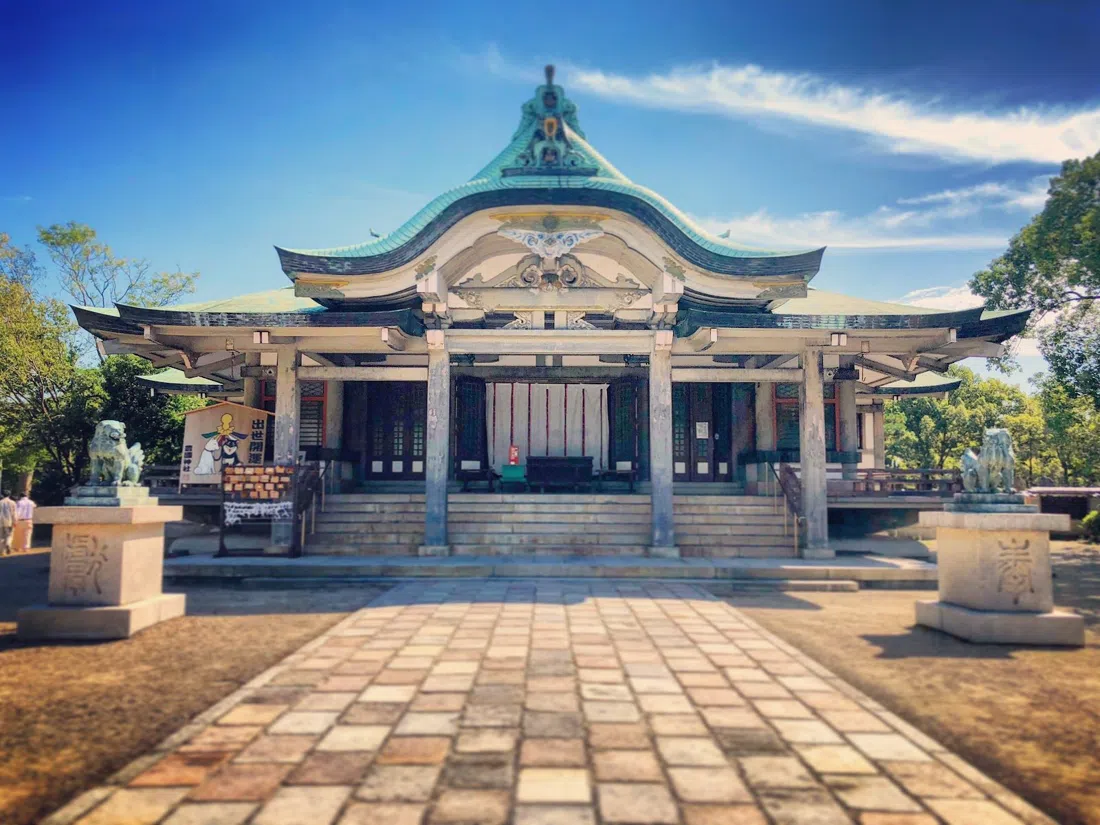
Hokoku Shrine sits directly on the walking line between Sakuramon gate and the tower, in the park's inner enclosure, and it is free and unticketed. It enshrines Hideyoshi, the man who built the castle in the first place, so thirty seconds of detour buys you the context the keep's own exhibits take for granted. Groups walk straight in with no arrangement at all; only the shrine office keeps set hours, roughly 9:00 to 16:50, so come earlier if you want a goshuin stamp or an amulet.
The interiors the reconstruction is not
If your dates allow it, this is the best-value thing in the park. The Osaka Castle Yagura Turret Special Opening covers Tamon-yagura and Sengan-yagura, on the Otemon side of the western approach, and puts you inside Important Cultural Property buildings: genuine seventeenth-century timber, floorboards, loopholes and roof structure, the original fabric that the reconstructed keep, by definition, lacks. Ten minutes in there teaches you more about how the castle was defended than an hour of display cases.
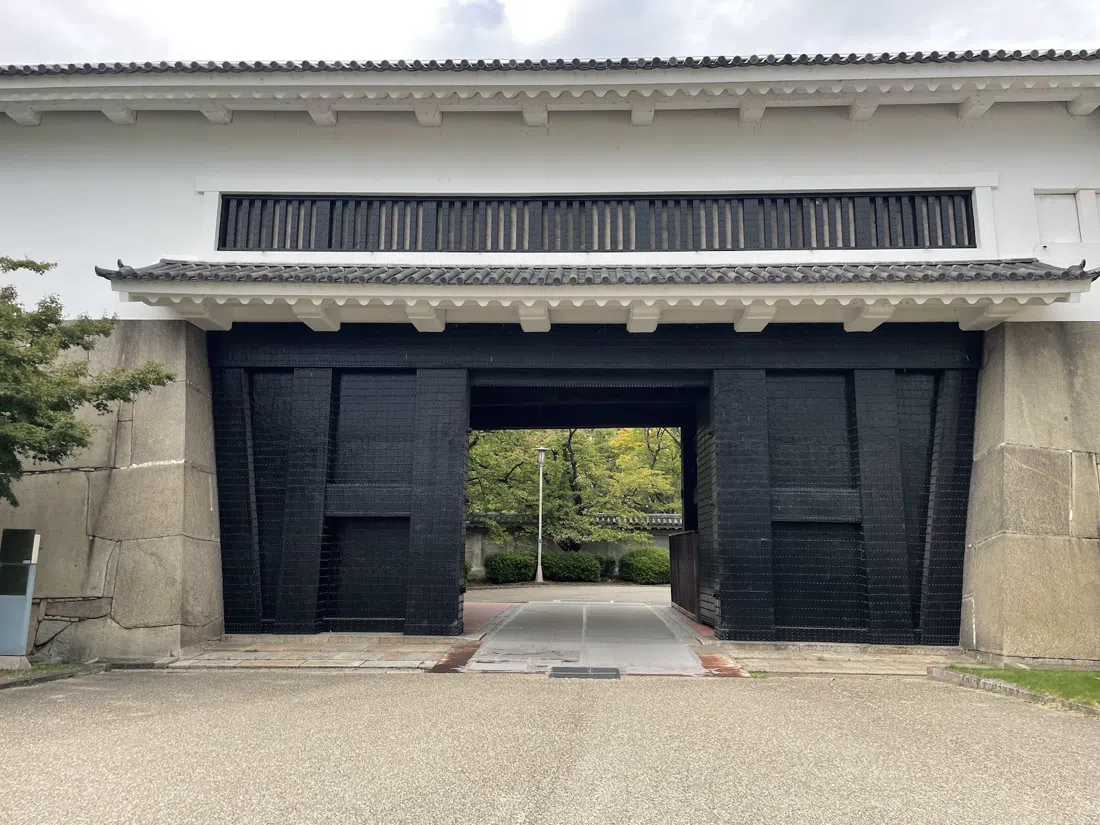
The autumn 2026 run is 5 September to 29 November, on weekends and public holidays, with a continuous daily stretch from 19 to 27 September, 10:00 to 16:30. Tickets are ¥900 for adults and ¥300 for children for the turrets alone, or ¥2,000 for an adult set ticket that includes the Main Tower, worth doing as a set if you are going up the keep anyway. Both the turret ticket and the set ticket are handled for groups at the on-site booth.
Where the tower actually looks its best
Ask where to photograph the castle and the answer is not the moat road, and not the courtyard directly beneath it, where you are craning upward at an awkward angle. It is Nishinomaru Garden, the walled lawn occupying the western bailey. Entry is ¥200 for adults, ¥350 during cherry blossom season, and free for junior high age and under: the price of a vending-machine coffee for the best ground-level view of the keep in the whole complex, with enough distance to get the building and its stonework in one frame. The lawn absorbs large parties without strain, which is why it is the standard spot for group photographs.
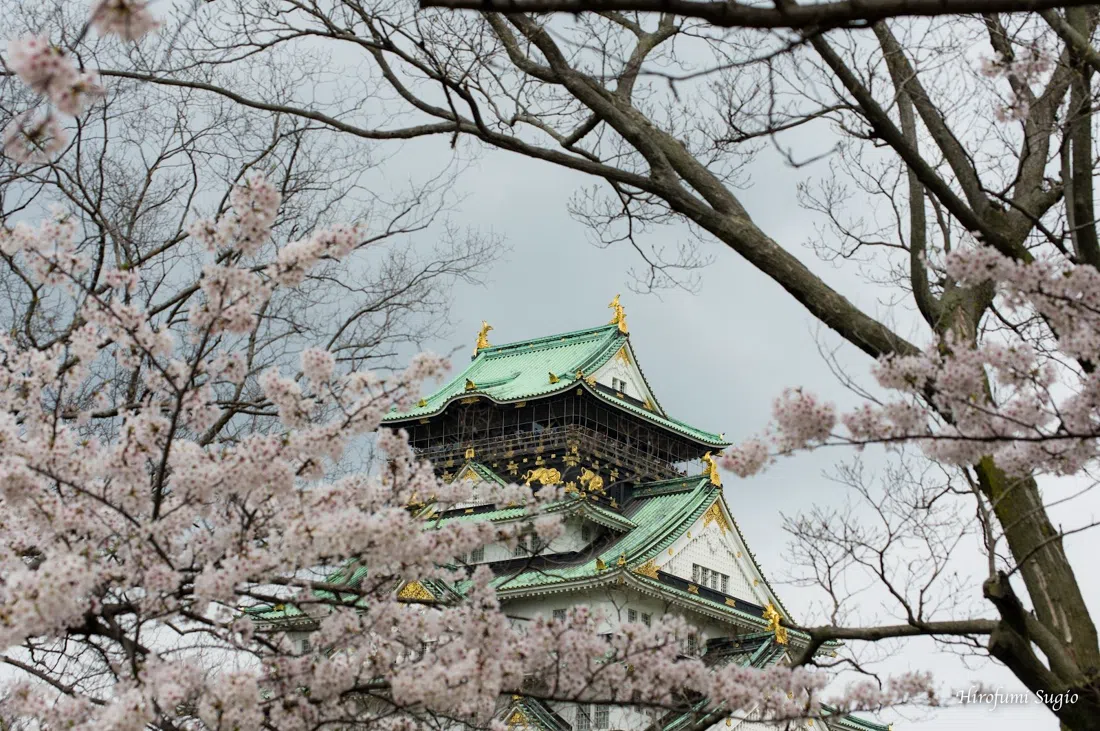
Nishinomaru closes on Mondays, while the keep stays open. Plenty of first-timers do the castle on a Monday, wonder why every photograph they took looks cramped, and never find out what they missed.
Twenty minutes at the foot of the stones
Osaka Castle Gozabune runs a twenty-minute loop of the inner moat directly below the keep, and it does one thing no walking route can: it puts you at the base of the giant stones, looking up the full height of the wall rather than down at it from the parapet. Tickets are ¥1,800 for adults, ¥900 for elementary and junior high children and ¥1,200 for visitors aged 65 and over.
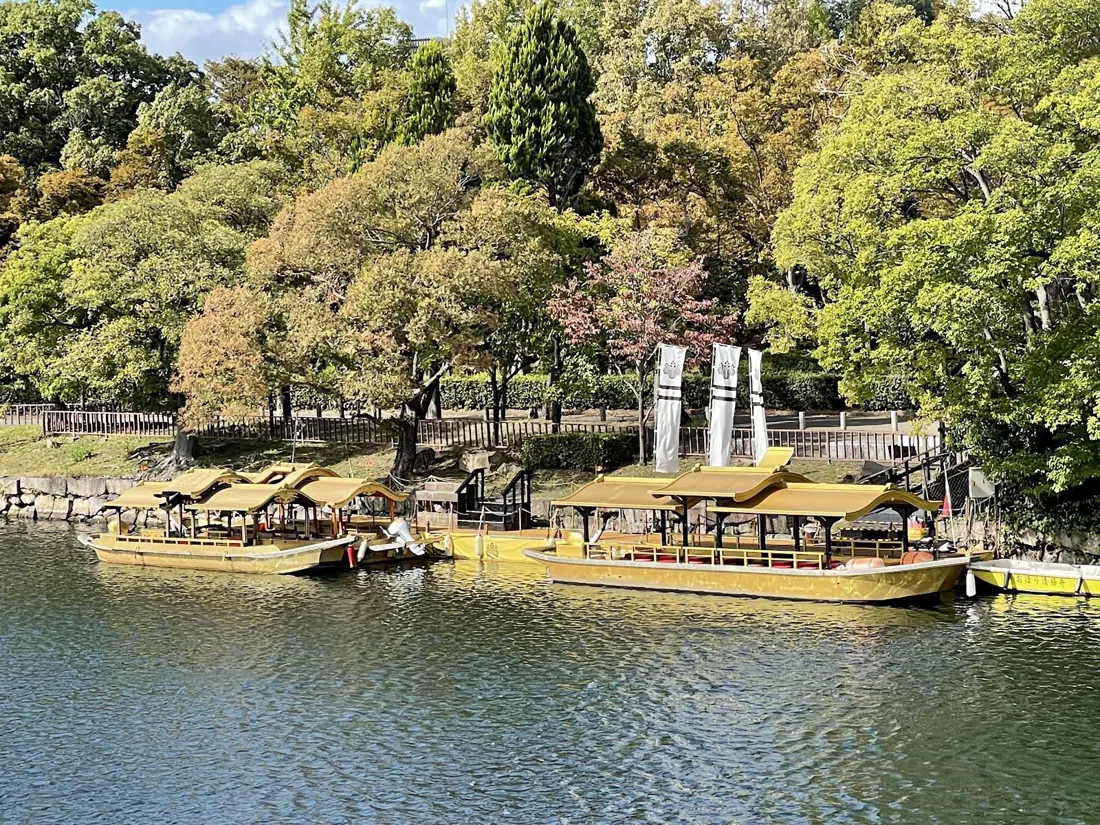
The booth opens at 09:30 and regular departures are walk-up only. They cannot be reserved, and on a busy afternoon they sell out, so buy your slot when you arrive rather than after the keep. Whole-boat charters are a different matter and can be booked from six months to three days ahead, which is the route for a group that wants a guaranteed sailing. Strong wind shortens or cancels the trip entirely, with no warning beyond the sign at the booth, so treat it as a bonus rather than the spine of your plan.
Eating without leaving the walls
The park's kiosks are not the reason you came. Two proper options sit at either end of the complex.
MIRAIZA OSAKA-JO occupies a handsome older building in the main bailey, a few steps from the keep, and it is the one place you can eat with the tower in front of you. Entry is free; a coffee runs around ¥500 and lunch ¥1,500 to ¥3,000, with the rooftop barbecue and dinner service higher. Current tenants include BLUE BIRDS ROOF TOP TERRACE on the roof, THE KONAMON BAR RIKYU, crossfield, RASPBERRY with MOON BAR and a Kaiyodo figure museum for anyone in the party who has had enough history. Several rooms seat parties, and there are takeaway counters for groups that would rather eat on the lawn.
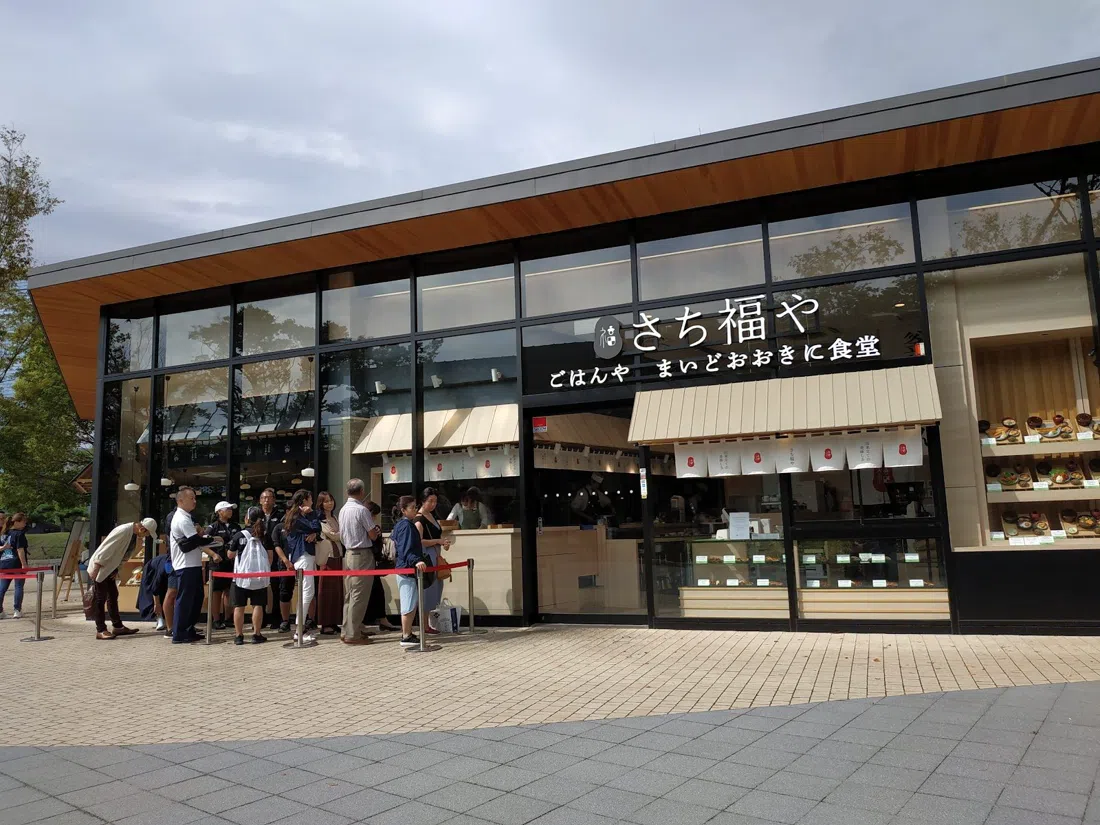
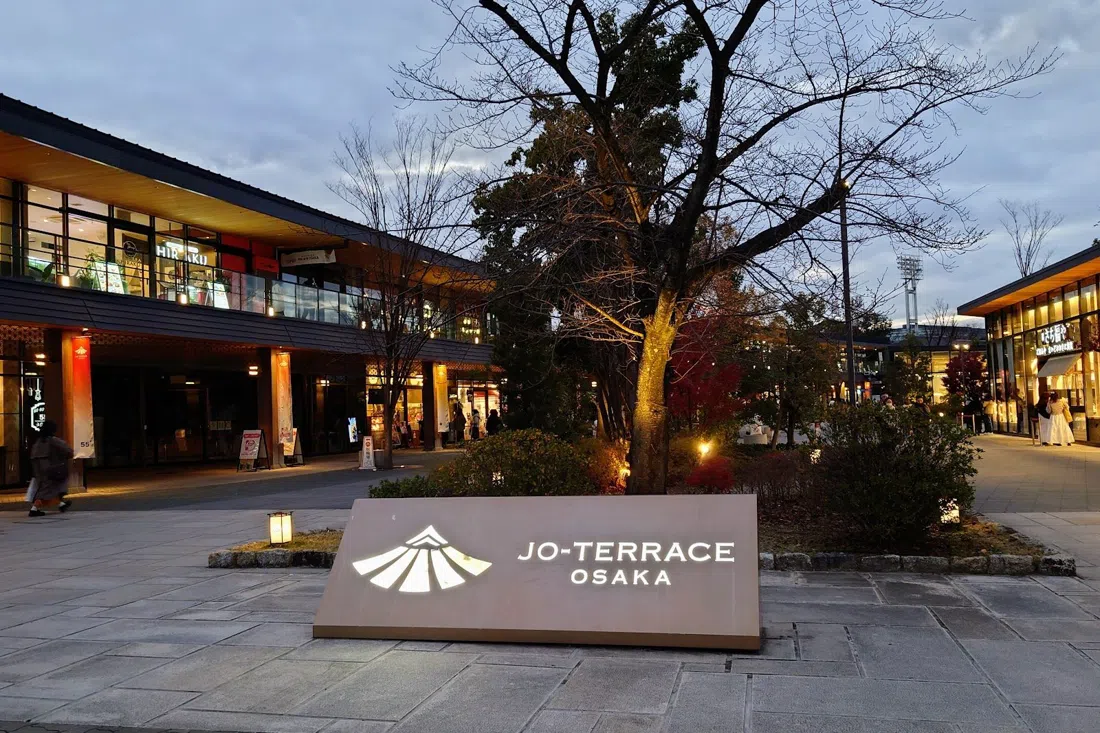
JO-TERRACE OSAKA sits at the park's north-west gate, immediately outside Osakajokoen Station on the JR Loop Line, and it is built for volume: around twenty-three tenants, so a group that cannot agree on one cuisine splits and regroups without argument. Budget ¥800 to ¥2,500 a head. Chibo does okonomiyaki, there is a Starbucks and a Tully's for the coffee-and-sit-down contingent, plus pancakes and ramen. If you arrive by the Loop Line, this is the natural start or finish of the day.
The quiet room in the south-east corner
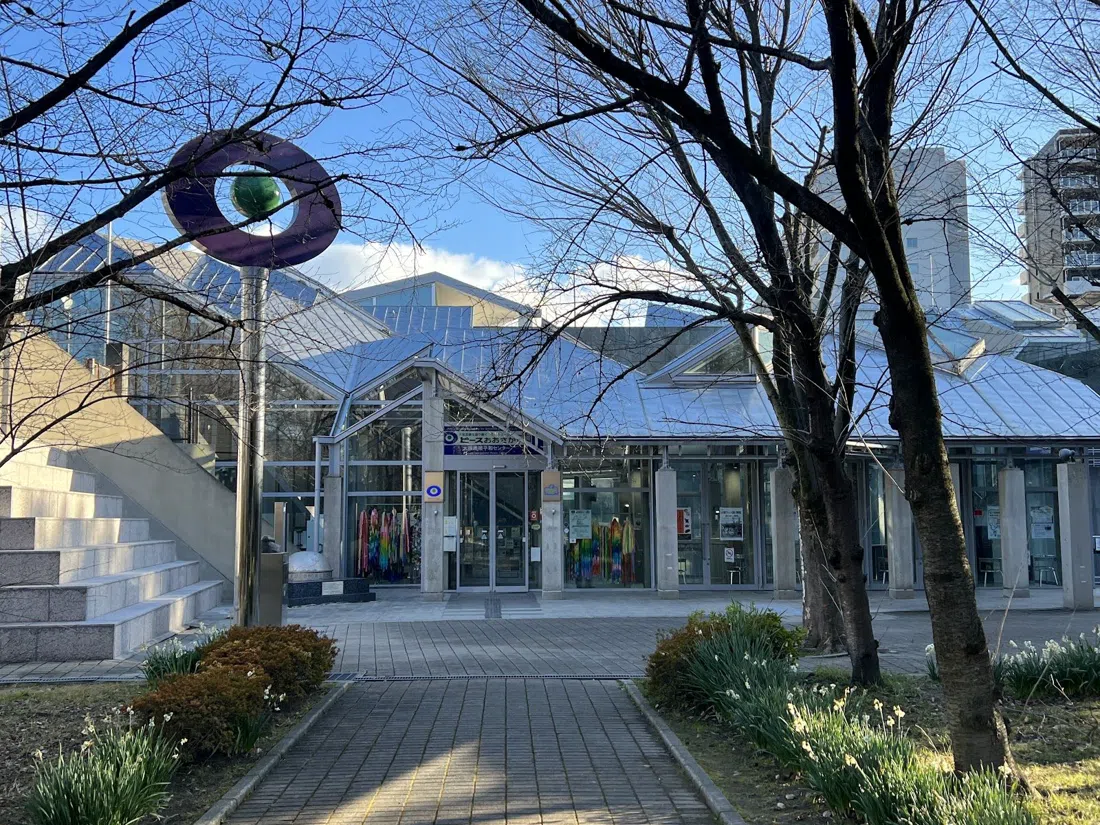
Inside the park, the Osaka International Peace Center, Peace Osaka, covers the 1945 air raids on the city. It is sober and short, and it puts the rest of the day in proportion. Admission is ¥250 for adults, ¥150 for high school students, and free for elementary and junior high children, visitors aged 65 and over and disabled visitors; parties of 20 or more pay ¥200 and ¥100. It closes on Mondays and on the day after a public holiday, which catches people out more often than the Monday itself, so check the calendar before routing a group there.
Ten minutes west and thirteen centuries back
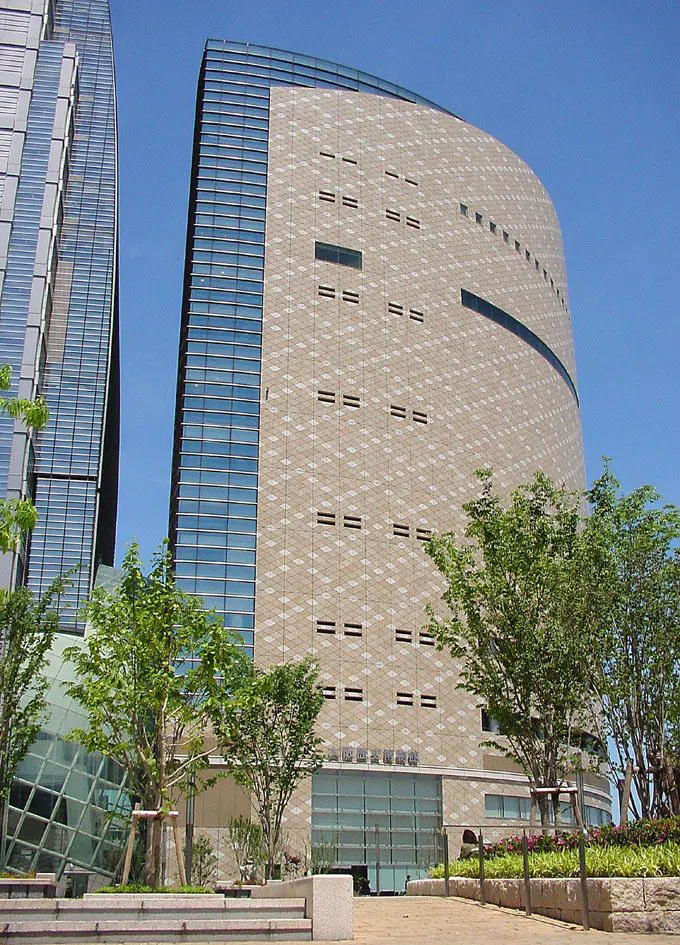
Walk ten minutes off the castle's south-west side and you reach the Osaka Museum of History in Otemae, the single best place to understand what you have just spent the morning walking around: the city's layers, laid out in order, with the castle visible from the windows. Entry is ¥600 for adults, ¥400 for high school and university students, free for junior high and under, and ¥540 each for parties of 20 or more. It opens 9:30 to 17:00 and closes on Tuesdays, so it does not pair with a Tuesday castle day.
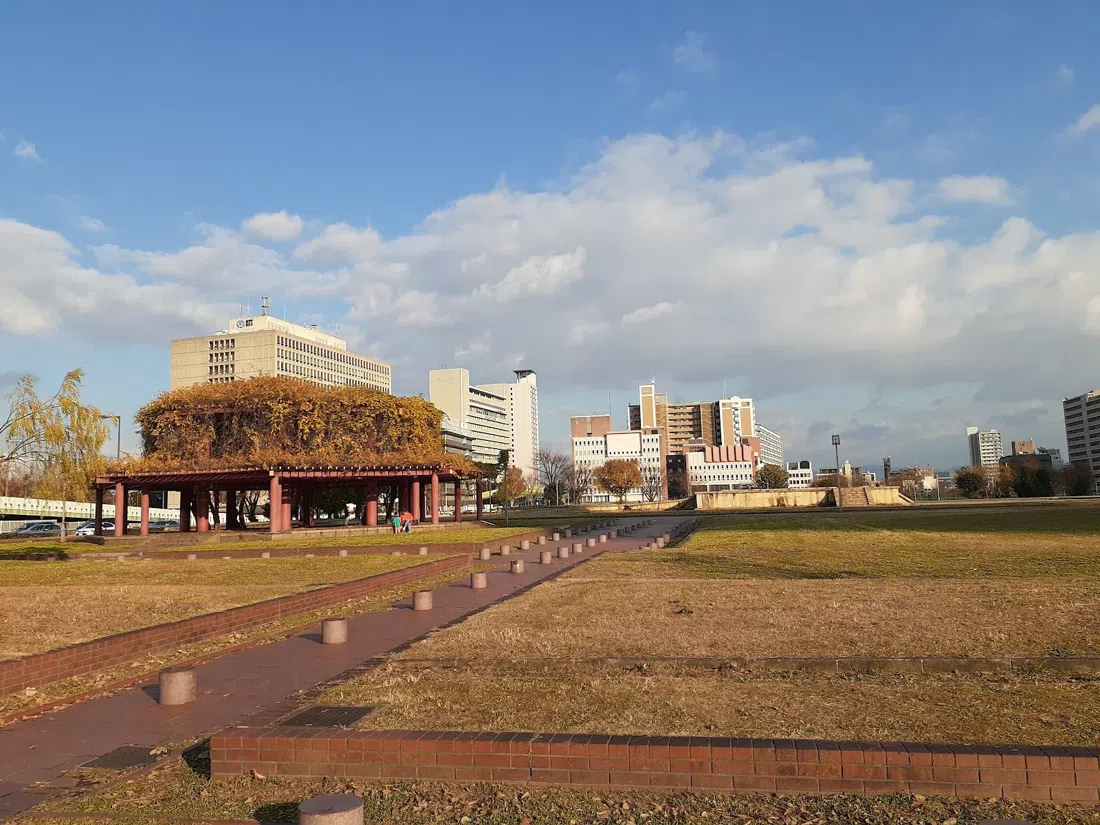
Directly beside it lies Naniwa Palace Site Park, free, open and unstaffed: the site of the seventh-century imperial capital, some thirteen hundred years older than anything in the castle grounds, now a wide platform of grass and low foundations. It is the quietest open space within walking distance of the keep, and after the stairwell and the ticket queue that counts for something.
Leaving the park by river
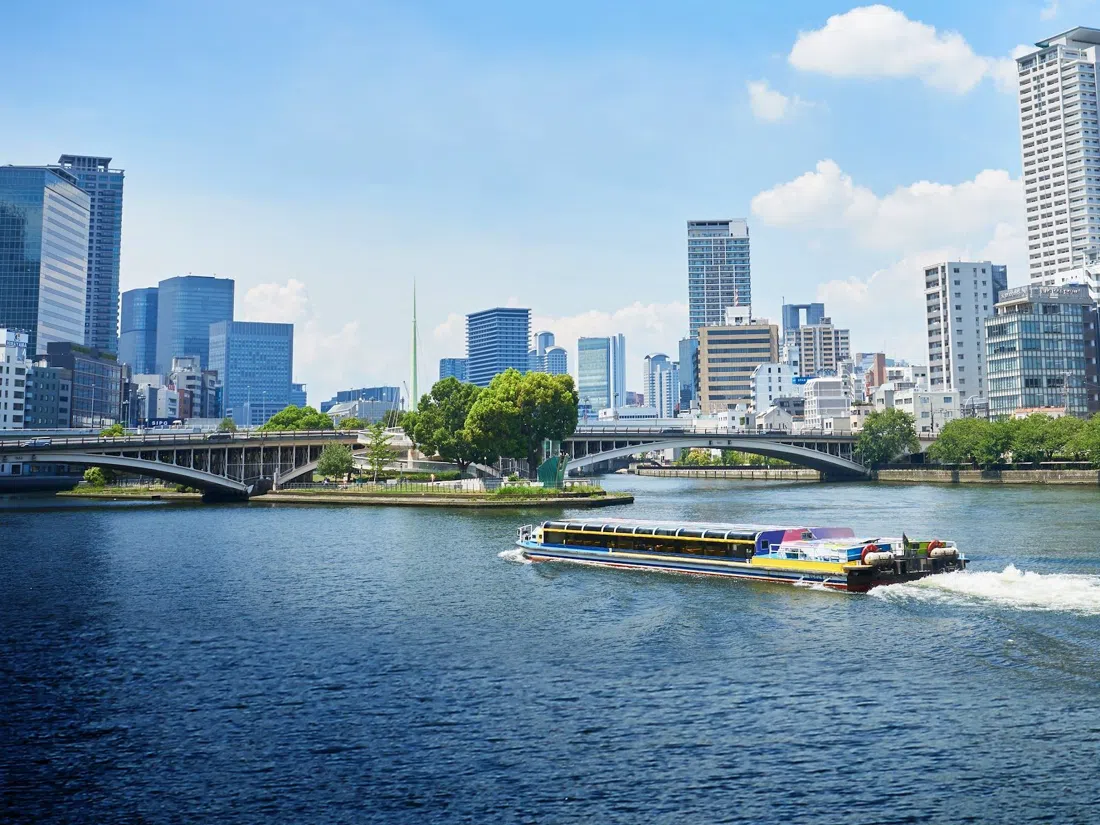
Rather than backtracking to the station, you can walk down to Osaka Castle Port and take the Osaka Suijo Bus Aqua-liner, a different operator and an entirely different trip from the moat boat. It runs roughly fifty-five minutes along the Okawa, down past Nakanoshima, departing hourly from 10:00 to 16:00, at ¥2,000 for adults and ¥1,000 for elementary school children. The vessel is large, air-conditioned, all-weather and has toilets, which makes it the sensible option with children or in heat, and group and charter bookings go through the operator directly.
What the rest of the day is for
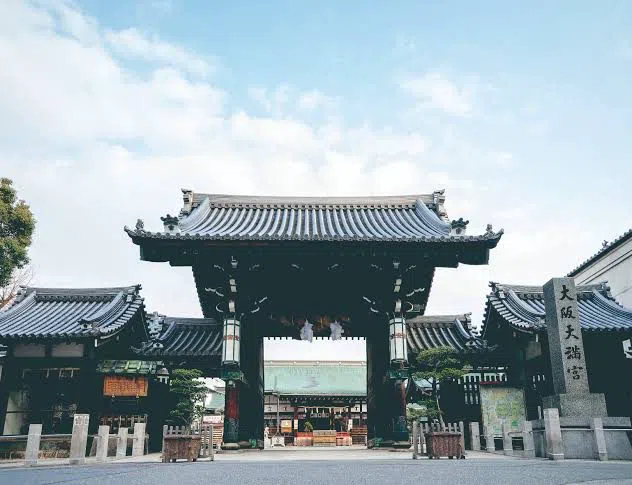
Two stops from the castle, Osaka Tenmangu Shrine in Tenjinbashi is over a thousand years old and dedicated to Sugawara no Michizane, the deity of learning. It is free, needs no reservation on ordinary days, and opens straight onto the arcade, which makes it the natural hinge between a castle morning and an unstructured afternoon.
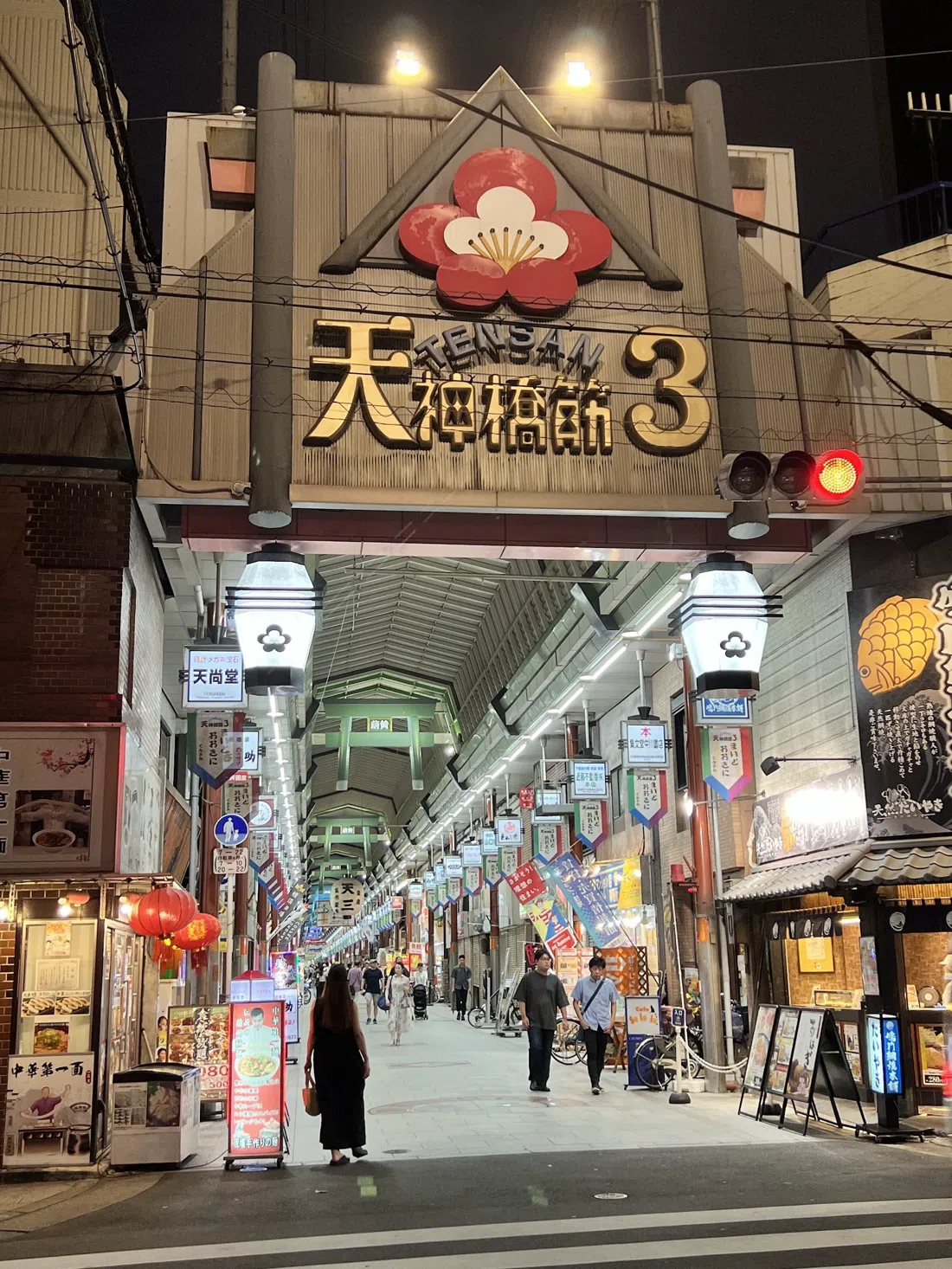
That arcade is Tenjinbashisuji Shopping Street, the longest in Japan, roughly eight hundred shops including a tea merchant trading since 1868. Snacks run ¥200 to ¥800 and sit-down meals ¥1,000 and up. It is fully roofed, which makes it the rain plan for a castle day that turns wet, and Osaka days do turn wet. The width handles a group comfortably except near the Tenjinbashi 2-chome end, where it narrows and clogs.
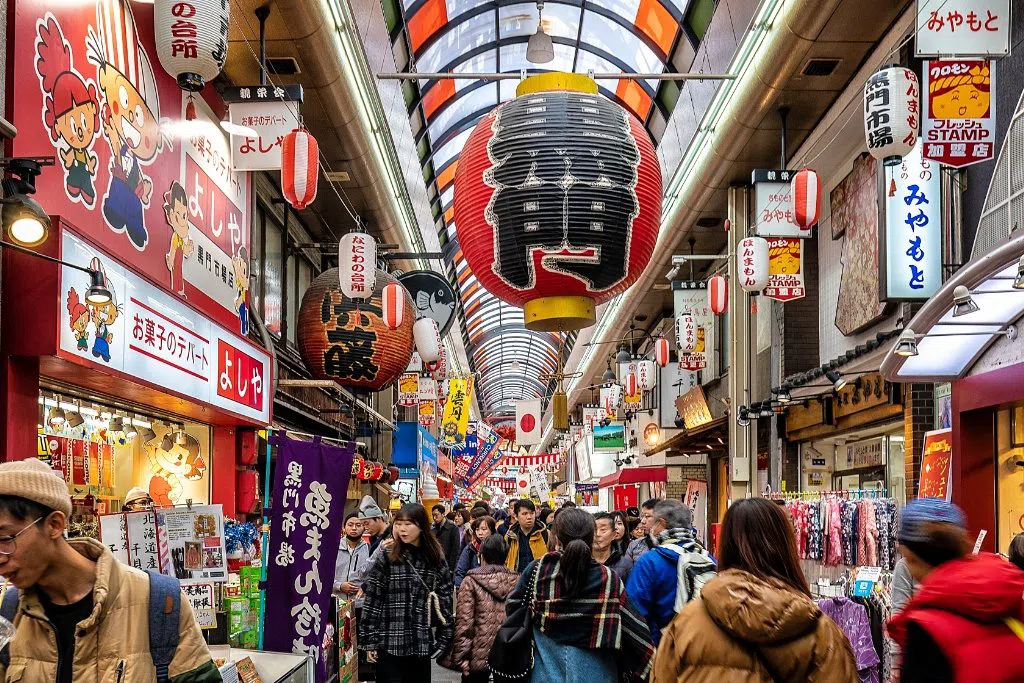
Kuromon Ichiba Market in Nipponbashi is the one venue that will not bend to a castle-first schedule. It is at its best between about 9:00 and 11:00, while the fishmongers are still working and before the aisles jam solid; by mid-afternoon it is a slow shuffle past picked-over counters. If you want it properly, do the market first and reach the castle by eleven. A fair number of stalls also close on Sundays and public holidays, so treat it as a weekday item.
Finish at Dotonbori in Minami, about fifteen minutes from the park by metro. Go after dark, when the signage is the entire point; in flat afternoon light it is just a canal with crowds. The street itself has no door policy, but the famous restaurants rarely seat large walk-in groups, so book ahead or split into twos and fours and meet on the bridge afterwards.
Who fits where
Couples and pairs can improvise the whole day: walk up to the moat boat, squeeze into the underground wall chamber, eat at a counter in Dotonbori. Groups need three decisions made in advance. Charter the Gozabune if you want a guaranteed sailing, send one person to the Main Tower window to arrange the 15-plus rate, and split the party at Toyotomi Ishigaki-kan and at any well-known Dotonbori restaurant. Everything else in the park, including the shrine, the garden and the lawns, takes a group without ceremony.
Practical notes
Getting there. Osakajokoen on the JR Loop Line puts you at JO-TERRACE and the north-west gate; Tanimachi 4-chome on the subway is closest to the south-west side, the Museum of History and Naniwa Palace. From the gate to the keep is a genuine ten to fifteen minutes on foot in each case, uphill through the gates. The park is larger than the map suggests.
Closing days, in one line. Nishinomaru Garden shuts Mondays. Peace Osaka shuts Mondays and the day after public holidays. The Museum of History shuts Tuesdays. The Main Tower and the Stone Wall Museum open every day except 28 December to 1 January. A Monday or Tuesday visit still works; it just works differently, so check before you build the route.
Money. Carry cash. The castle ticket windows, the moat-boat booth, the garden gate and most market stalls are quicker with coins and notes, even where cards are accepted. A realistic day for one adult: ¥1,200 for the keep and the buried wall, ¥200 for the garden, ¥1,800 for the moat boat, ¥900 for the turrets if they are running, around ¥1,500 for lunch and ¥2,000 for the river cruise out. That is roughly ¥7,500 for the full version, or ¥1,400 for the essentials plus a free shrine and a free ruins park.
Timing. Nine in the morning at the gate, out of the tower by eleven, garden and moat boat before lunch, museum or Peace Osaka in the early afternoon, arcade or market, then Dotonbori after dark. That is a full but unhurried day, and it does not require you to run.
Where to sleep. Staying near the JR Loop Line or the Tanimachi subway line puts you a short ride from the gates and a short ride from the evening; compare rates and locations through our Osaka hotel search, and use the wider Osaka guide to slot the castle into the rest of your days rather than treating it as the whole of one.