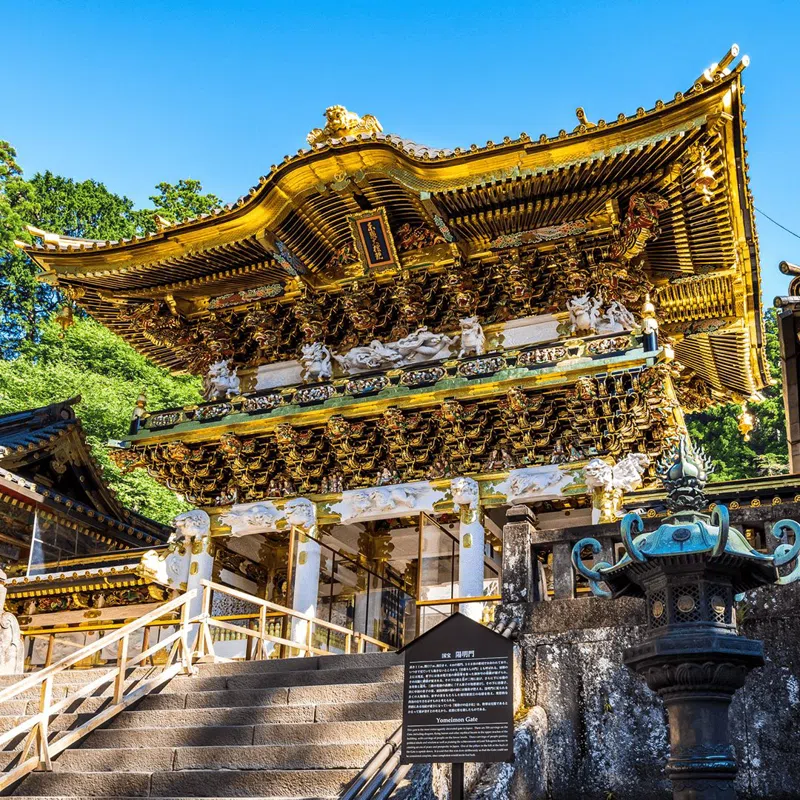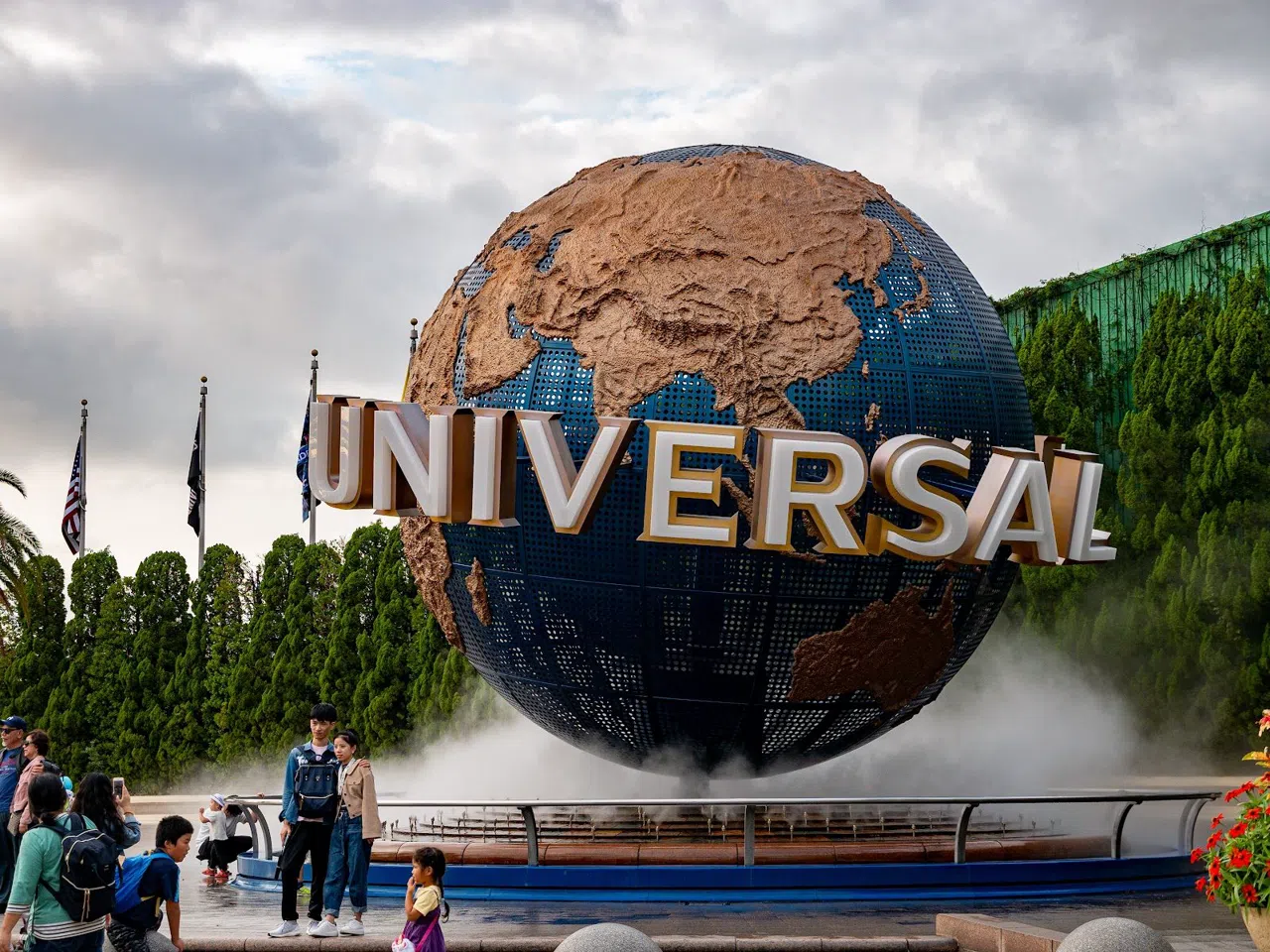

The gates of Universal Studios Japan stand on reclaimed land in Konohana ward, a stretch of Osaka Bay that was working industrial water inside living memory, and by a quarter past eight the plaza in front of them is already a solid field of people. Very little about that first hour can be improvised. The ticket, the bed, the walk and the queue you join on your phone all have to be settled days earlier. Settle them properly and the park takes a day rather than the whole trip, which leaves the rest of Osaka intact: a bay to cross, a bathhouse to collapse into, and griddles that have been running since the 1940s.
Buy the park ticket before anything else
Everything else in this piece is movable. Universal Studios Japan (bayside Konohana ward) is not. A 1-Day Studio Pass starts at ¥8,400 for an adult and ¥5,500 for a child, but that is a floor rather than a price. The park prices dynamically, and a genuine peak date climbs to something like ¥11,900 and ¥7,200. There is no walk-up discount to wait for and no late bargain; busy dates simply sell out. Early booking is the only lever you have on the cost of the day.
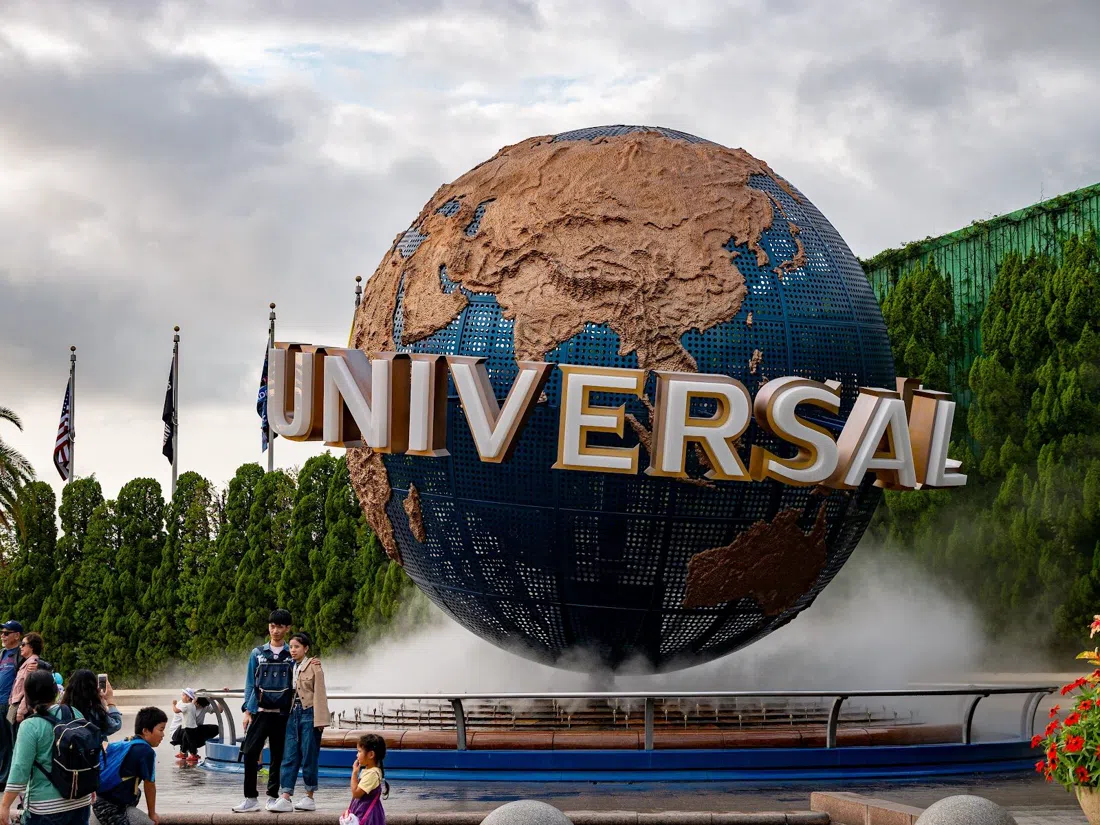
That matters more for a party than for a couple. Every single person needs their own dated Studio Pass, and a group that buys in dribs and drabs across an afternoon can end up holding passes for two different days because one date closed between transactions. Buy for everyone, for the same date, in one sitting.
The two lands people come for cannot simply be walked into. Super Nintendo World and Donkey Kong Country are managed through Area Timed Entry or Standby Entry tickets, issued in the official app once you are physically inside the gates. The first act of your day, before any ride, is therefore standing a few metres past the turnstiles with your phone out, claiming a slot. Install the app and sign in the night before, on a connection you trust.
Universal Express Pass 4 and Express Pass 7 sit on top of all that, a further ¥9,500 to roughly ¥26,000 depending on date and tier, and they are an add-on that does not include admission. People turn up every week having believed the opposite. On a crowded Saturday an Express Pass converts a day of queueing into a day of riding; on a quiet weekday in the shoulder season it is money you will not notice having spent well.
Sleeping close enough to walk to the gate
The official hotels earn their keep on the twenty minutes you are not spending on a train at eight in the morning with a child who has already had enough, not on the theming.
The Park Front Hotel at Universal Studios Japan (Universal City) is about a minute from the main gate, and on a first day that single fact is the whole argument for it: you walk out at opening rather than ride in. Bunk-bed rooms are sold explicitly for families and larger parties, and the front desk sells both Studio Passes and Express Passes, so a group can settle its tickets in one transaction instead of six phones and four card declines. The old JTB Early Park In fifteen-minute head start has been withdrawn, so proximity now buys you position in the morning queue, not early entry. Rates are mid-range in principle and swing sharply with park demand in practice.
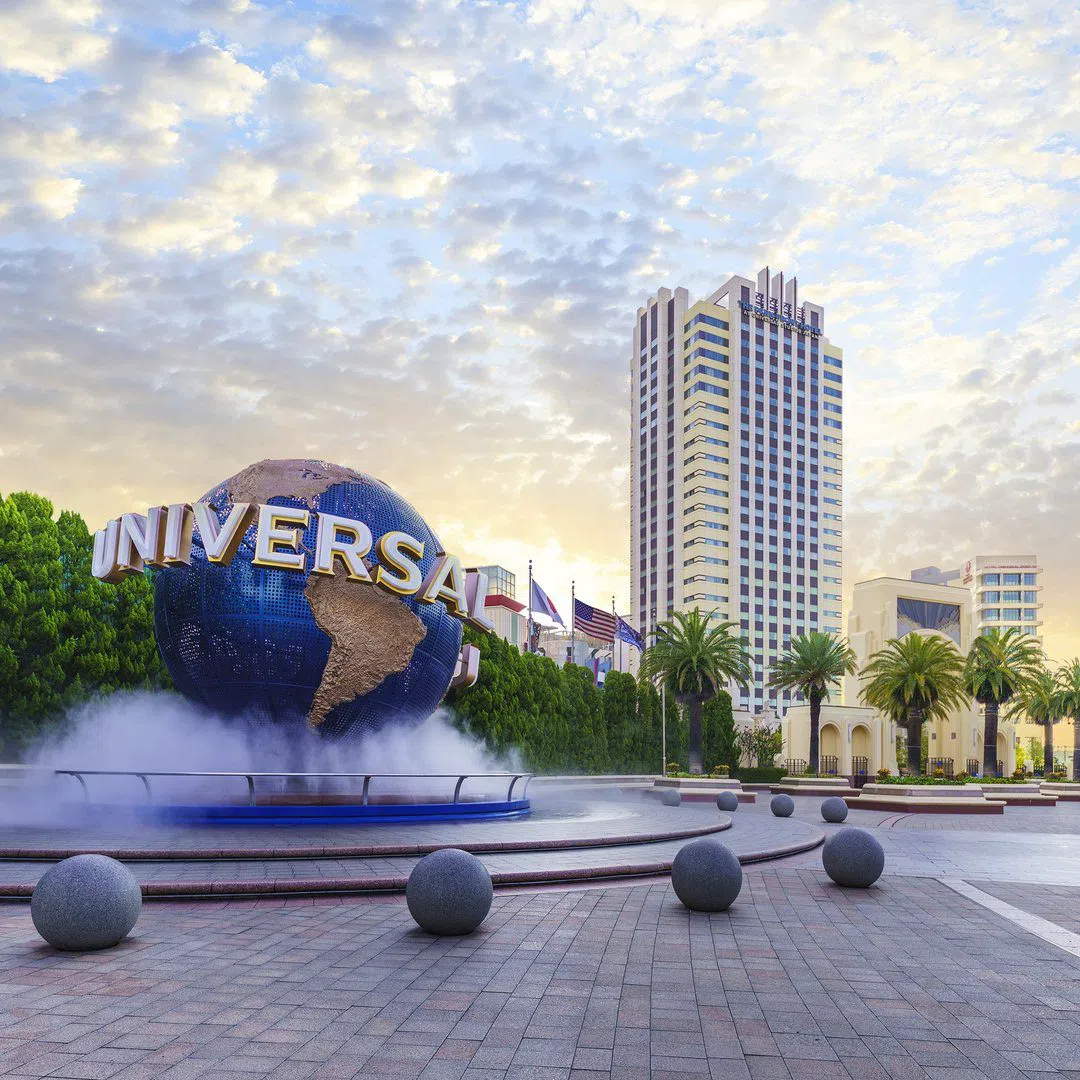
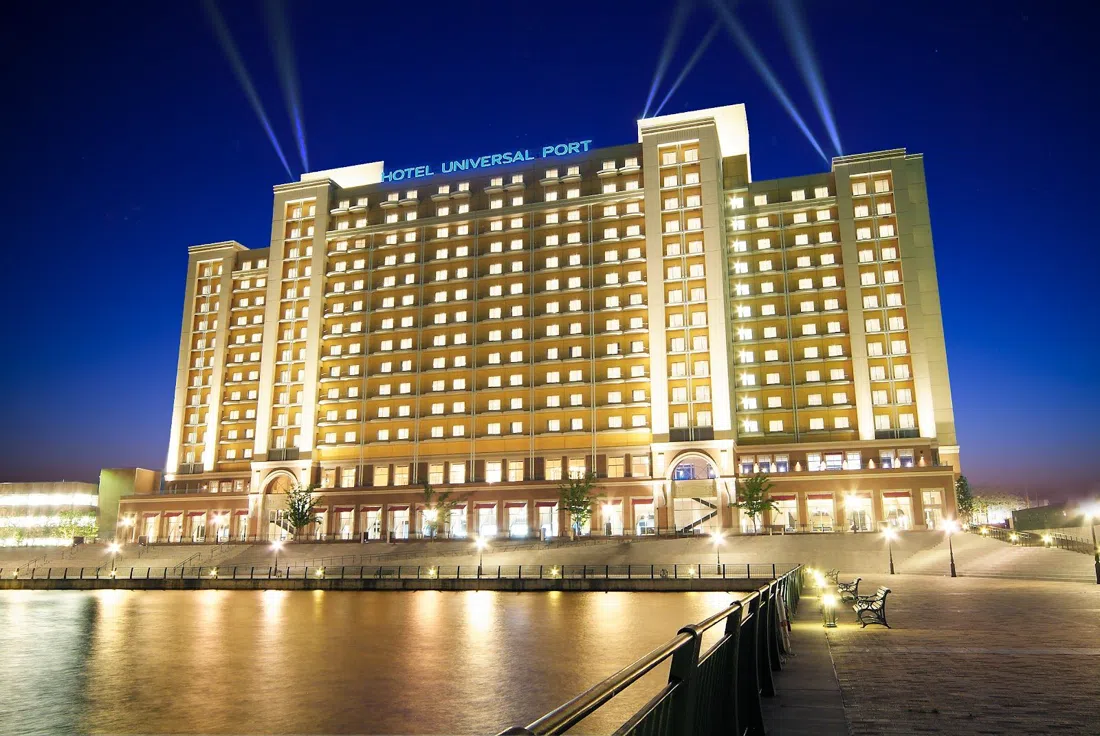
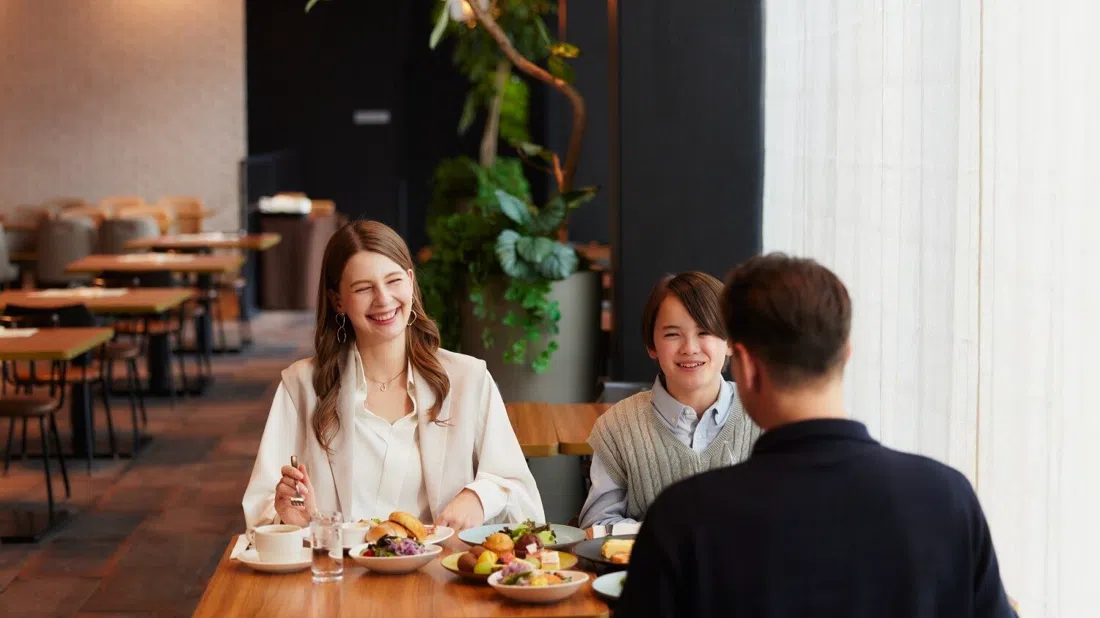
Hotel Universal Port (Universal City) is four minutes from the entrance and three from Universal City station, and its 1,177 rooms are what matter. Scale absorbs a big party without splitting it across floors or annexes, there are themed bunk-bed and low-bed rooms and play areas for younger children, it holds Japan's first Minion rooms, and the breakfast buffet runs to roughly seventy Japanese and Western dishes, which is how you get nine people fed and out of the door inside forty minutes.
LIBER HOTEL OSAKA (Sakurajima) sits beside JR Sakurajima station, one stop from Universal City, with spacious sea-view and park-view rooms and a real natural hot spring drawn from a thousand metres down. Two restaurants, a café and a bar keep a group in one building once nobody wants to move again. Swapping a one-minute walk for a one-stop train is worth it if you already know the day is going to end in a bath.
A central base is also a perfectly sound choice, since the park is eleven or twelve minutes from Osaka station by train, and if you would rather spend the money on location in the city than on the gate, start with the Osaka hotel search.
Eating on either side of the turnstiles
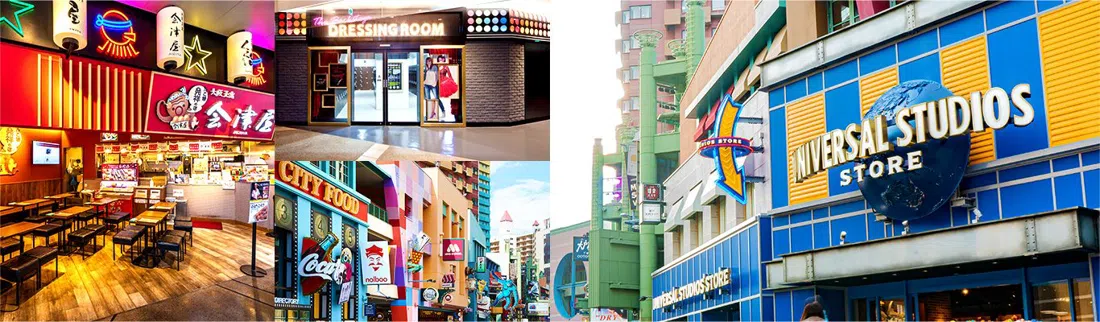
Universal Citywalk Osaka (Universal City) is the complex you walk through between the station and the gate, which makes it the obvious place to eat before opening and after closing rather than paying in-park prices. No ticket, no door policy, and it is the natural regroup point for a party that has scattered inside the park: teenagers on rides, grandparents on a bench, everyone meeting at a takoyaki counter for a few hundred yen a plate. The floors run on staggered hours, with the third floor from 10:00 and restaurants on the fourth and fifth serving until 23:00, so it is still feeding people long after the last ride has stopped.
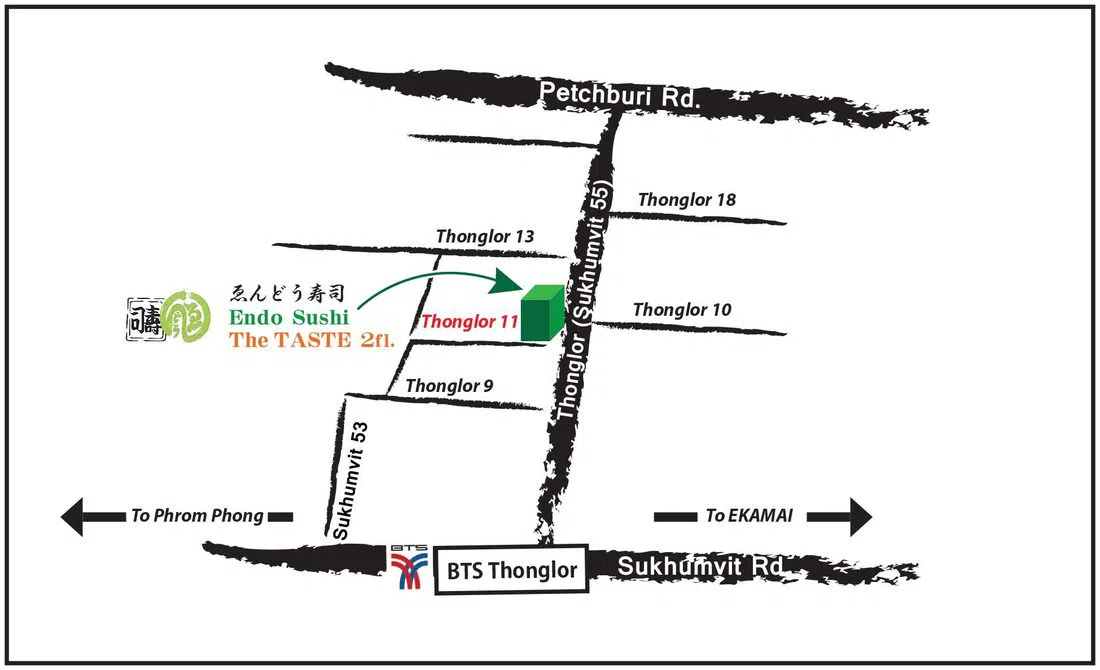
If you are staying centrally and have the discipline for it, Endo Sushi (Osaka Central Wholesale Market, Noda) opens at 06:15 inside the working market and closes in the early afternoon, which makes it one of the few genuinely excellent breakfasts in the city you can finish before a park opening. It is a century-old operation serving tsukami sushi, loosely packed and still faintly warm from the hand, in sets of five pieces from around ¥1,400. The room is a small counter, comfortable for two to four and awkward above that, so a group of six should go in shifts rather than stand in the aisle. It closes when the market closes, so confirm the day before you set an alarm for it.
Crossing the bay instead of spending a second day
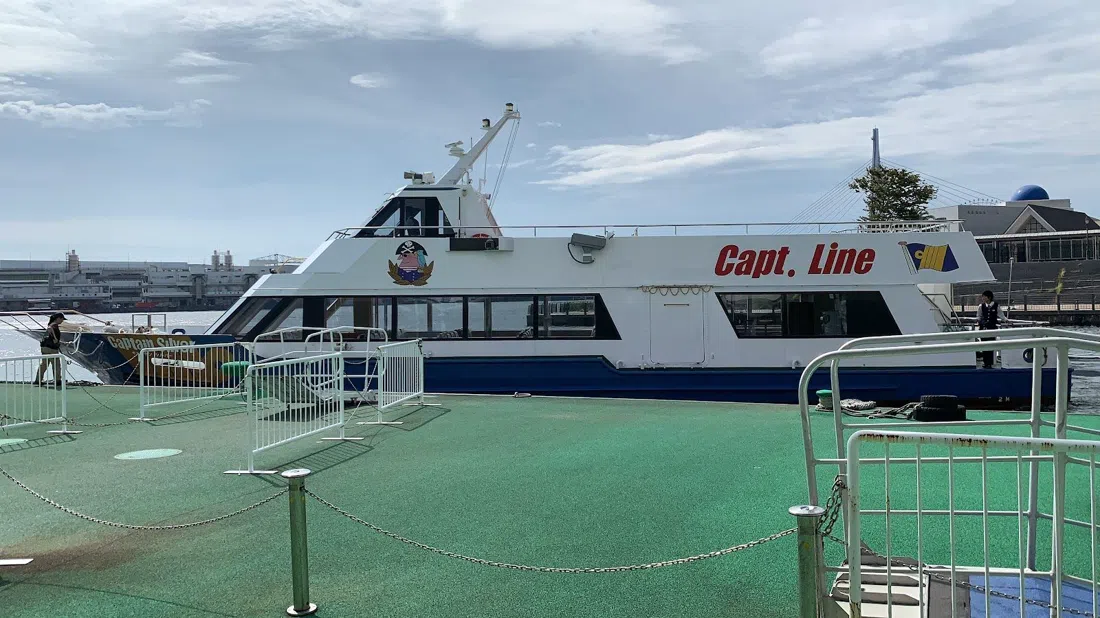
The best thing about the park's location is that the second-best day out in Osaka is ten minutes away across the water. The Capt. Line shuttle boat runs from Universal City Port to Kaiyukan West Wharf for ¥900 one way and ¥1,700 return for an adult, ¥500 and ¥900 for elementary-age children, ¥400 and ¥700 for ages three and up, and the return ticket carries coupons for the Ferris wheel and local hotels. Walk-on groups are fine. It is not, however, a bus you can lean on blindly: sailings are roughly hourly, they are suspended whenever the park or the aquarium is closed, and they can stop for weather or sea conditions. Know the train alternative before you need it.
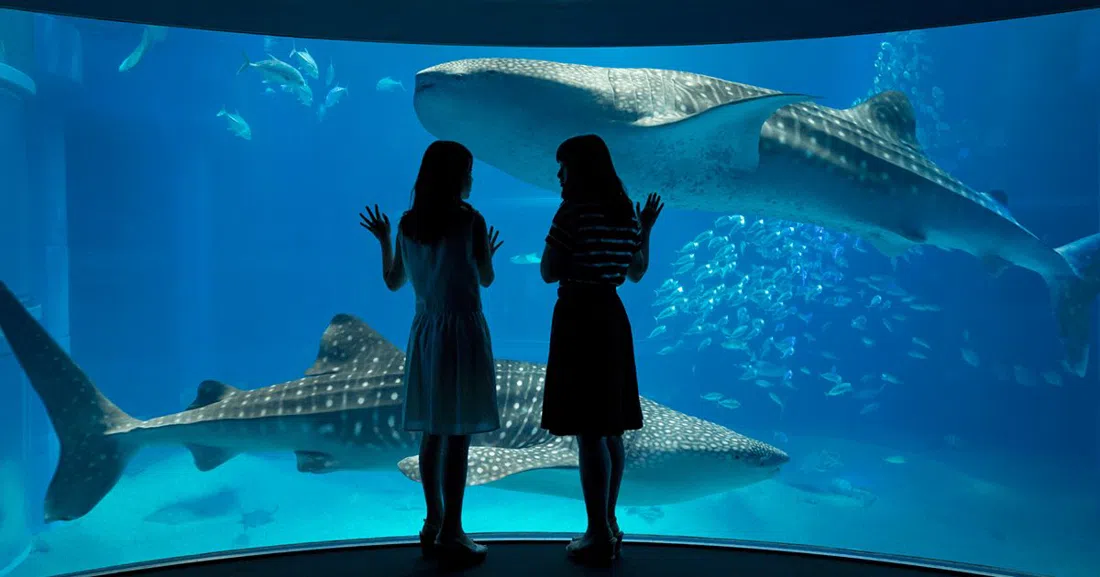
Osaka Aquarium Kaiyukan (Tempozan, Minato ward) is the right-sized second act when nobody can face a second theme-park day. The Ring of Fire, Ring of Life exhibition is built as a one-way descending route, which is why it moves large parties without the bottlenecks you get in a gallery you can double back through. Tickets are around ¥2,400 for an adult on ordinary weekdays and up to ¥2,700 at peak, ¥1,400 for children aged seven to fifteen and ¥700 for four- to six-year-olds. It runs 10:00 to 20:00 with last entry at 19:00, so it will happily absorb a late afternoon. One planning warning: the retro Naniwa Kuishinbo Yokocho food alley in the adjoining Tempozan Marketplace closes from 29 September 2026 for a rebuild, due to reopen in spring 2027, so do not build lunch around it.
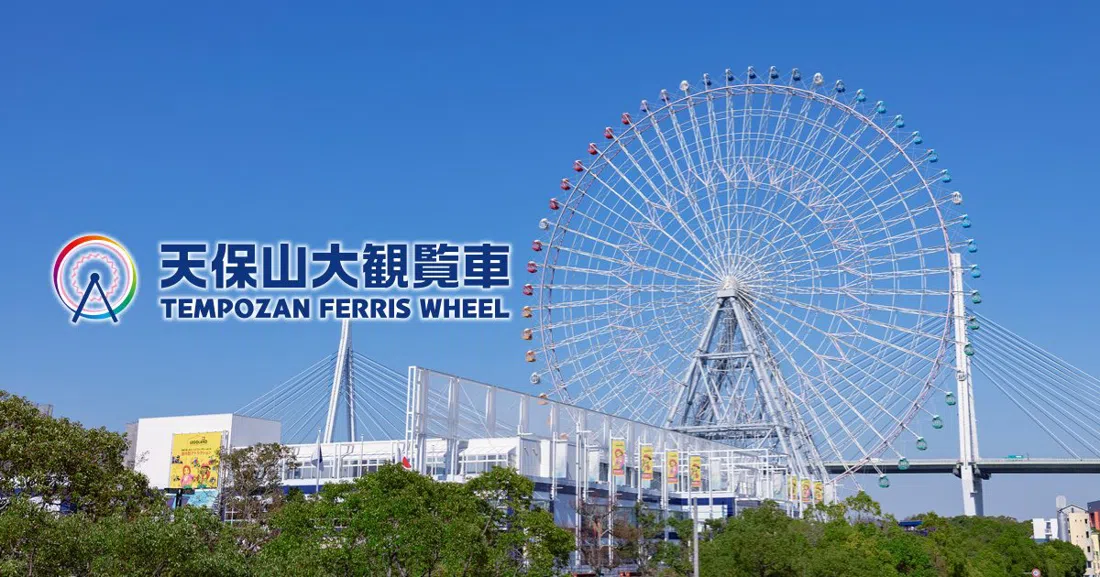
Next door, the Tempozan Giant Ferris Wheel (Tempozan) takes fifteen minutes and lifts you 112.5 metres, and for ¥900 a head (¥800 for parties of twenty or more) it is the cheapest way to understand how the park, the bay and the city actually fit together, which is worth more on a first day than it sounds. Three of the sixty cabins are wheelchair-accessible. It turns to 21:00 on weekdays and 22:00 at weekends and on holidays, and its outer lighting is a forecast for the next day, which is a genuinely useful thing to glance at on your way to dinner.
What to do with your legs afterwards
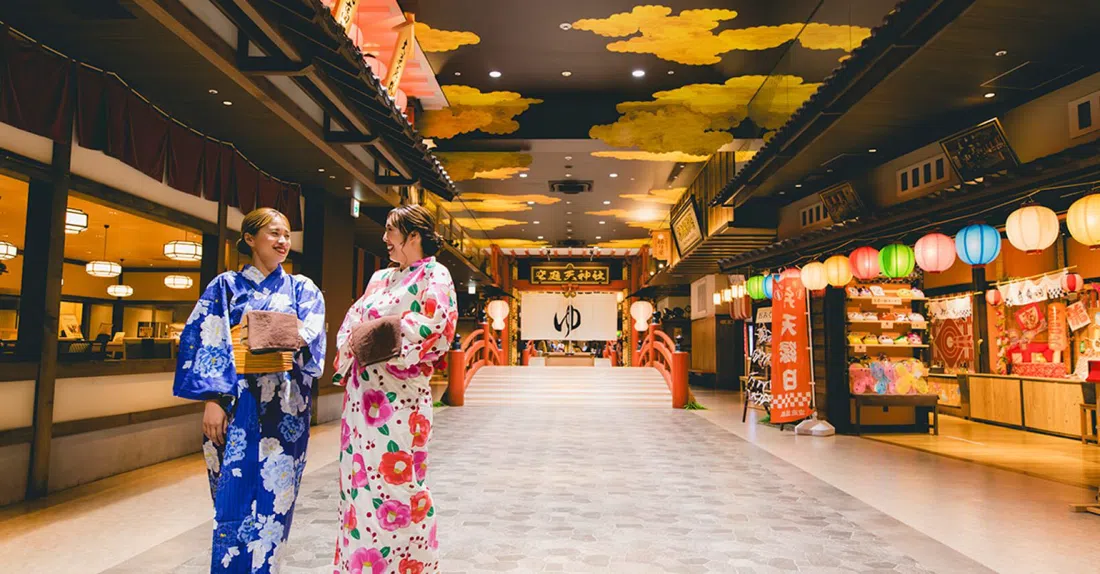
Twelve hours on your feet on hot tarmac is the part of a park day nobody plans for. Solaniwa Onsen OSAKA BAY TOWER (Bentencho) is two stops off the park route and open 11:00 to 23:00 with last entry at 22:00, and its night rate from ¥1,980 after 17:00 exists precisely for people arriving at park closing. Standard admission runs ¥2,310 to ¥3,630 for an adult depending on the date, with children at a flat ¥1,320. It is a large bathhouse complex rather than a quiet ryokan bath, with dining, festival stalls and games, which makes it easier with children in tow. Two answers settle the usual sticking point: private baths can be booked for anyone not comfortable in a shared one, and tattoos are accommodated. It closes one Wednesday a month, so check your date rather than your luck.
Dinner that is not racing a closing time
Osaka's best-known counters are small, and small counters and large groups do not mix. Plan accordingly rather than arriving hopeful.
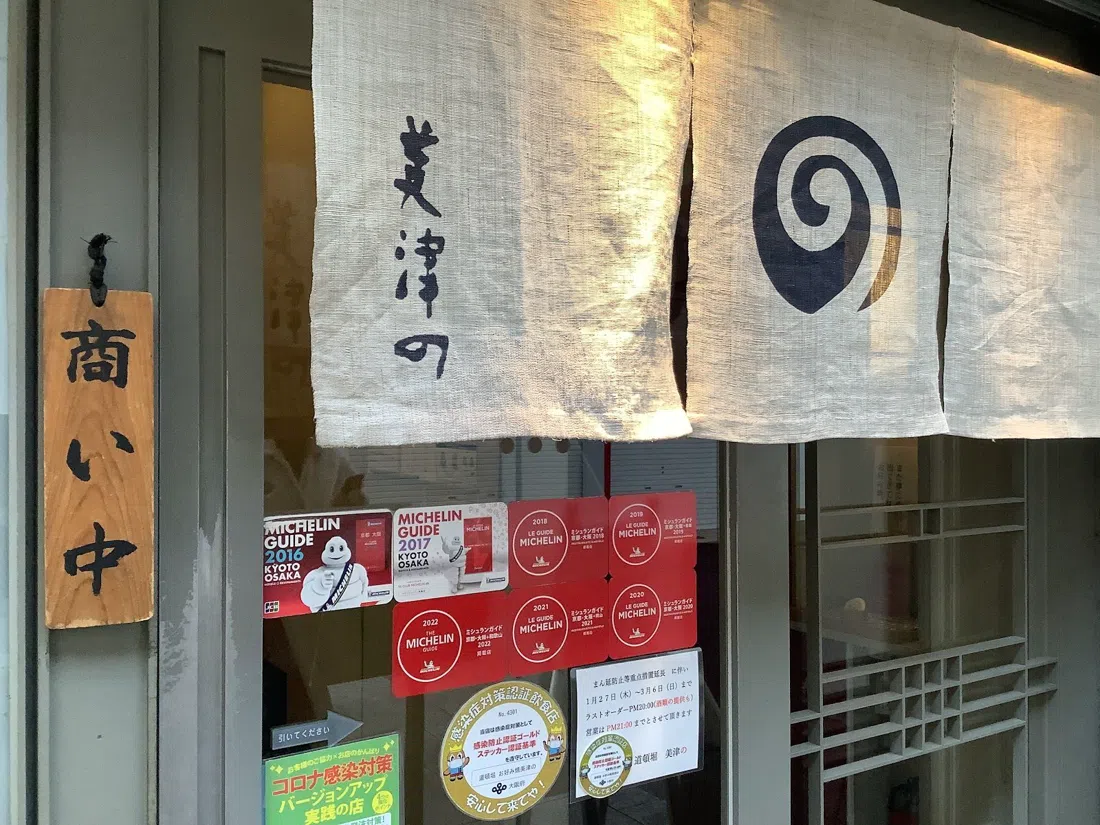
Okonomiyaki Mizuno (Dotonbori) has been open since 1945 and has held a Michelin Bib Gourmand every year since 2016, which is about as close to a guarantee as Dotonbori okonomiyaki gets. It opens at 11:00, takes last orders at 21:00 and closes on Thursdays, costs roughly ¥1,500 to ¥3,000 a head, and it is walk-in only in a small room. Pairs and threes are seated far faster; a group of six will be split or will wait a long time. Because it refuses reservations outright, treat it as the plan for a night when you are not also racing a park closing time.
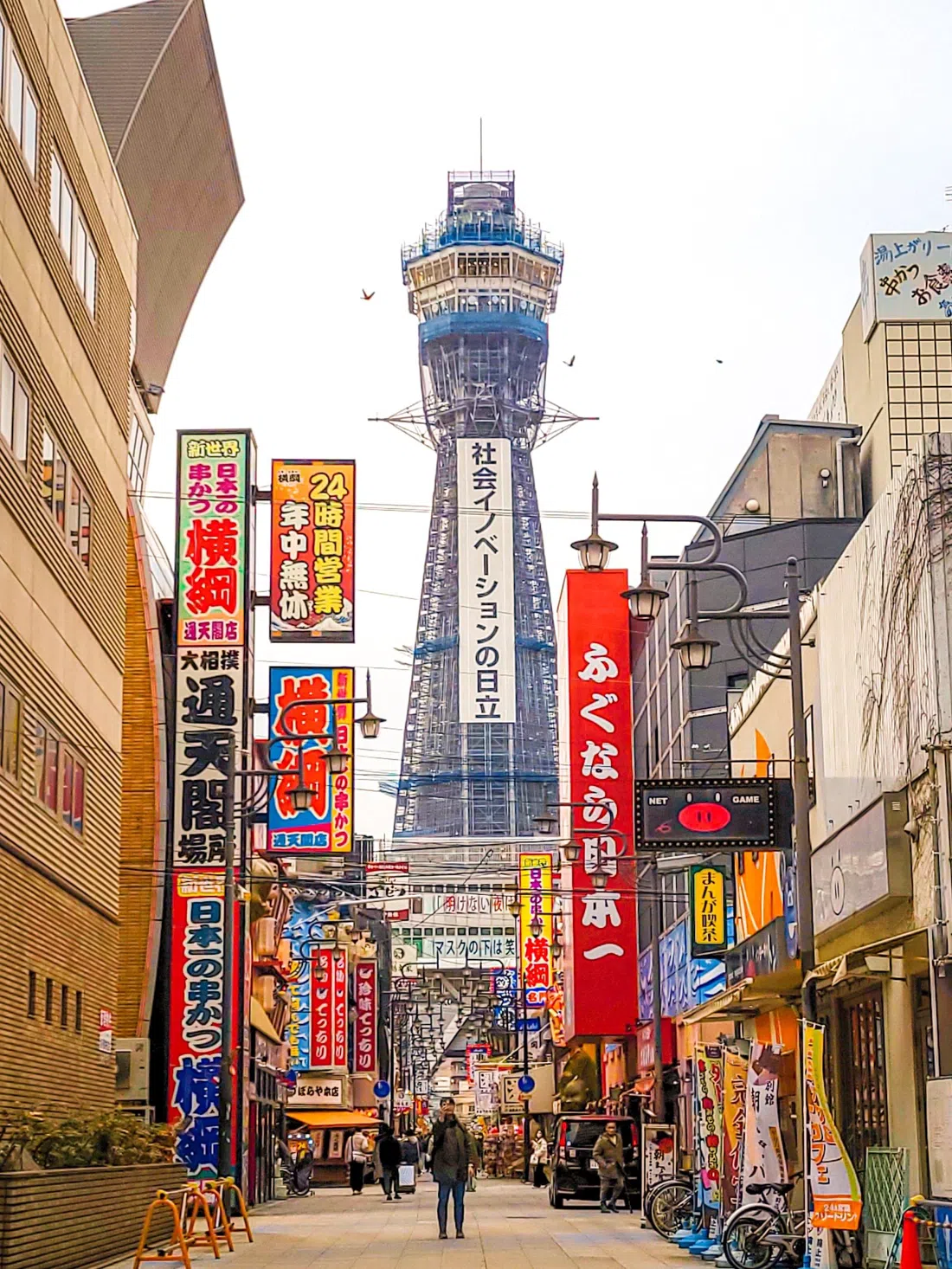
Ganso Kushikatsu Daruma, Shinsekai Sohonten (Shinsekai) has been frying kushikatsu on this spot since 1929 and is generally treated as the origin of the dish, open 11:00 to 22:30 on weekdays and from 10:30 at weekends, with skewers from around ¥150 and sets running to a few thousand yen. The original shop is small and counter-seated, fine for a handful, and the chain's other Shinsekai and Dotonbori branches absorb the overflow instead of forcing one long wait: splitting a group of eight across two branches works far better than queueing as one. One house rule outranks the menu. The communal sauce tub takes a single dip, and no double-dipping.

Upstairs from all that, Tsutenkaku Tower (Shinsekai) has run 09:00 to 22:00 since March 2026, with last tickets at 21:30, which makes it a workable late stop for a group that has already spent the day elsewhere. The observatory is ¥1,200 for an adult and free with the Osaka Amazing Pass; the Tower Slider, sixty metres of enclosed tube spiralling from the third floor to the basement, is bought separately at the counter for ¥1,000 adult and ¥500 child and is not covered by the pass. It is also single-rider, so it will bottleneck a large party while everyone else stands about. Send the volunteers and meet them at the bottom.
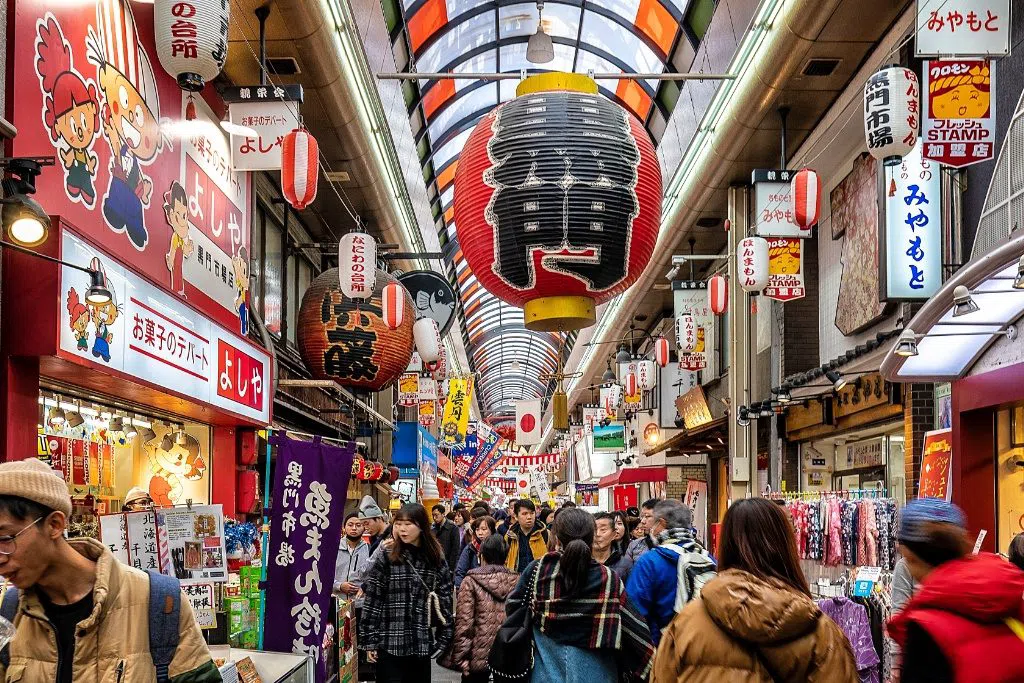
For a morning that is not going to the park at all, Kuromon Ichiba Market (Nipponbashi) has been in business since 1902 and is still a working market of about 150 shops, best walked early before the stalls fill. Skewers and grilled seafood run from a few hundred yen to about ¥2,000 an item, a group can graze separately and reconverge, and there is an information centre with a rest area and toilets, which is not a small thing with children. Most shops keep roughly 09:00 to 18:00 and a fair number close on Sundays and national holidays, so this is a weekday move.
Umeda on the way in or out
Nintendo OSAKA (13th floor, Daimaru Umeda) is the sane alternative to burning park hours queueing for Super Nintendo World's shops. Entry is free, it opens 10:00 to 20:00 daily, and it stocks more than 2,000 items including around a thousand Osaka exclusives; the floor is large enough to absorb a crowd, though weekends and school holidays get genuinely packed. It is minutes from Osaka station, which means it fits either end of the park journey without a detour.
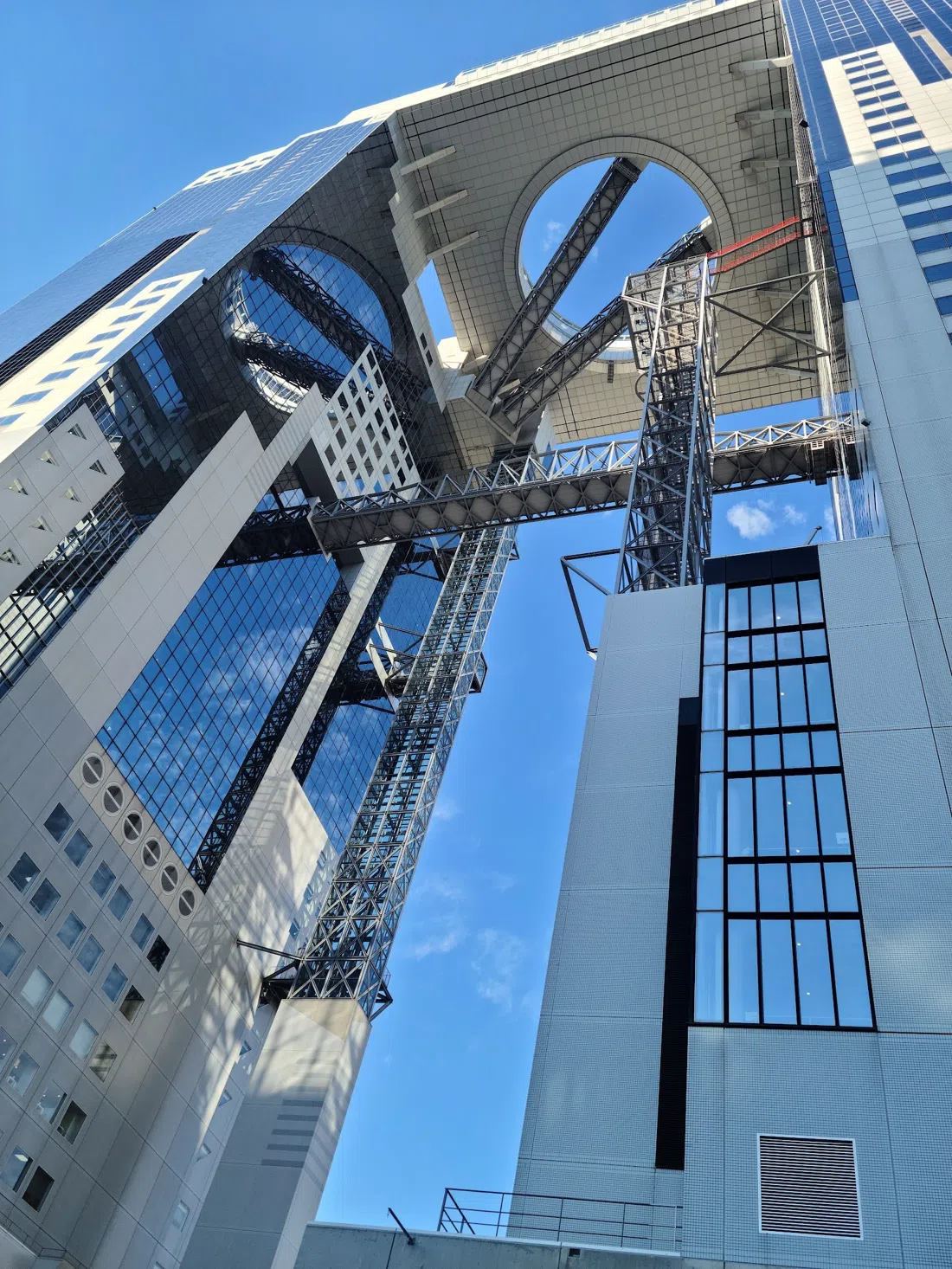
In the same district, Umeda Sky Building Kuchu Teien Observatory (Umeda) runs 9:30 to 22:30 with last admission at 22:00, so it still works after a park day that finished late. Adults pay ¥2,000, children aged four to twelve ¥500, under-fours nothing, and it is free with the Osaka e-pass before 15:00; there are group rates for parties of ten or more and school-group pricing. The draw is the open-air Floating Garden ring and the glass-sided escalator crossing the gap between the towers. The one real risk to your fare is weather, because the rooftop level can close, so keep it flexible rather than booked into a tight evening. For what to do with the days either side of all this, the Osaka guide is the place to start.
The practical part
Universal City station is on the JR Yumesaki Line; change at Nishikujo from the Osaka Loop Line and it is eleven or twelve minutes from Osaka station. An IC card taps you through everything, including the Loop Line and the subway to Bentencho and Nipponbashi. Carry cash regardless: the market stalls, the kushikatsu counter and the okonomiyaki room are all happier with it, and ¥10,000 to ¥15,000 a person for the day is sensible. Check your specific date's opening time in the park app the night before, since it moves by season and by day, and the plaza fills well before the posted hour. Budget, per adult, for a full bay-and-park day without an Express Pass: ¥8,400 to ¥11,900 for the Studio Pass, ¥1,700 for the return boat, ¥2,400 for the aquarium, ¥1,980 for the night onsen rate and around ¥3,000 for food, so roughly ¥18,000 to ¥21,000. Add the Express Pass and it very nearly doubles, which is the one decision in this itinerary worth sleeping on.